


How to Donate to Cancer Research and Drive Real Impact
July 17, 2026
How to Donate to Cancer Research and Drive Real Impact

When you donate to cancer research, you directly fund the science that turns terminal diagnoses into survivable ones. Philanthropic gifts ranging from $27 million to over $80 million have already accelerated precision therapy and personalized care at leading institutions. These are not abstract numbers. They represent new treatment centers, recruited scientists, and patients who lived because the funding existed. Every donation to cancer research, at any size, adds to that momentum. The Hippocratic Cancer Research Foundation (HCRF) is one trusted 501©(3) organization channeling this kind of giving into bold, unconventional research at Northwestern University’s Robert H. Lurie Comprehensive Cancer Center.
How can I donate to cancer research?
Making a donation to cancer research is more flexible than most donors realize. Institutions and nonprofits like HCRF accept several giving formats, each designed to match different financial situations and goals.
The most common donation types include:
- One-time gifts: A single contribution that funds an immediate project, equipment purchase, or research sprint. These are ideal when you want to respond to a specific campaign or milestone.
- Monthly recurring donations: A set amount charged automatically each month. Recurring monthly donations provide predictable funding that sustains long-term research and closes gaps between major grants. This consistency matters enormously to research teams planning multi-year studies.
- Legacy and estate gifts: Donations structured through a will, trust, or beneficiary designation. Legacy gifts and memorial tributes create lasting impact and honor loved ones. Many donors choose this path after a personal loss to cancer.
- Tribute and memorial donations: Gifts made in someone’s name, often shared with the family as a meaningful acknowledgment.
- Designated gifts: Contributions directed to a specific research program, lab, or facility within an institution.
Online portals are the fastest and most secure way to complete cancer research donations. Most reputable organizations offer encrypted giving pages that accept credit cards, ACH bank transfers, and sometimes digital wallets.
Pro Tip: If you set up a monthly gift, contact the organization’s development office to confirm your gift is applied to the research area you care about most. Many institutions will honor specific designations even for smaller recurring amounts.
What do you need before making an effective donation?
Preparation separates a confident donor from one who second-guesses the gift later. A few steps taken before you give protect both your finances and your intentions.

Verify the organization’s credentials
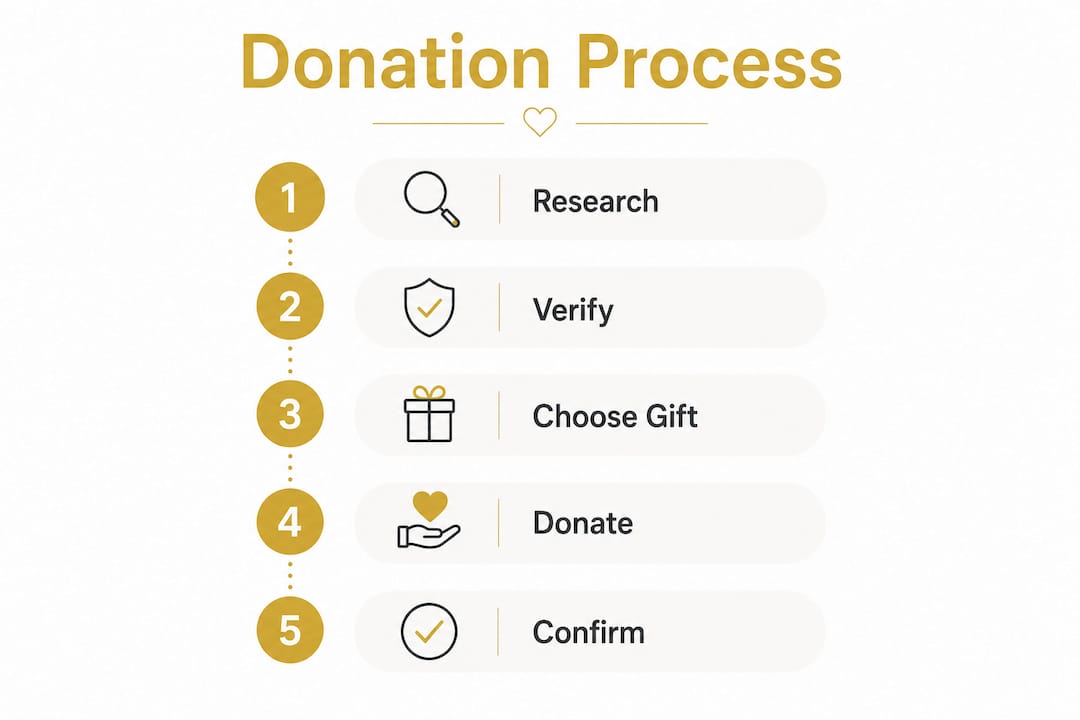
Check that the organization holds 501©(3) status with the IRS. This confirms your donation is tax-deductible and that the organization meets federal transparency standards. The IRS Tax Exempt Organization Search tool is free and takes under a minute to use. Verifying charity transparency and tax-exempt status protects your funds and maximizes research benefits.
Understand your tax deduction
Cash donations to qualifying 501©(3) organizations are generally deductible up to 60% of your adjusted gross income. Keep every receipt and acknowledgment letter the organization sends. If you donate appreciated stock or assets, different deduction rules apply, so consult a tax advisor before completing that type of gift.
Align your gift with your values
| Giving Goal | Best Donation Type |
|---|---|
| Immediate research impact | One-time designated gift |
| Sustained long-term funding | Monthly recurring donation |
| Honoring a loved one | Memorial or tribute gift |
| Lasting generational impact | Legacy or estate gift |
| Supporting bold, high-risk science | Unrestricted gift to HCRF |
Knowing which research area matters to you, whether that is precision oncology, genomics, or early detection, helps you direct your gift with purpose. HCRF specifically funds “out of the box” research that standard government grants often overlook.
Pro Tip: Before donating online, confirm the giving page URL begins with “https” and shows a padlock icon. Never complete a donation through a link sent in an unsolicited email.
Donors who want to include cancer research in their estate plans can find guidance on planned giving strategies that align philanthropic goals with long-term financial planning.
Step-by-step process for completing your gift
Confidence comes from knowing exactly what to expect. Here is how the process works from start to finish.
-
Choose your organization. Select a verified 501©(3) focused on cancer research. HCRF supports research at the Robert H. Lurie Comprehensive Cancer Center of Northwestern University, one of the nation’s leading NCI-designated comprehensive cancer centers.
-
Select your donation type. Decide between a one-time gift, a monthly recurring gift, or a legacy contribution. If you are unsure, a one-time gift is a low-barrier starting point that you can build on later.
-
Navigate to the official giving portal. Go directly to the organization’s website. Do not use third-party links from social media posts you cannot verify. Type the URL directly into your browser.
-
Designate your gift. Most portals include a field where you can specify a research program or leave the gift unrestricted. Unrestricted gifts give researchers the flexibility to apply funds where they are needed most.
-
Complete the donation form. Enter your name, contact information, and payment details. Double-check your email address. This is where your tax receipt and impact updates will arrive.
-
Set up recurring billing if applicable. Monthly donors typically receive a confirmation email with instructions to manage or cancel the recurring gift at any time. Monthly donors often receive regular updates that build trust and show exactly where the money goes.
-
Save your confirmation. Screenshot or print the confirmation page. Your formal acknowledgment letter will arrive by email or mail within a few weeks and serves as your official tax record.
-
Share your gift. Many donors inspire others by sharing their giving on social media or with their networks. Your action can multiply into more support for the research you believe in.
Pro Tip: If you plan to give more than $500 in a single gift, call the organization’s development office directly. Staff can walk you through designation options, matching gift programs, and any recognition opportunities that apply to your contribution.
Common donation mistakes and how to avoid them
Even well-intentioned donors make errors that reduce the impact of their gift or create problems later. These are the most common ones.
-
Giving to unverified organizations. Fraudulent cancer charities exist. Always confirm 501©(3) status through the IRS database before completing any transaction. If an organization pressures you to give immediately by phone, that is a warning sign.
-
Skipping the tax-exempt verification. Not every cancer-related organization qualifies for tax deductions. A charity must hold current 501©(3) status. Confirm this before assuming your gift is deductible.
-
Ignoring recurring gift terms. Monthly gifts auto-renew until you cancel. Read the terms before enrolling. Know how to update your payment method or pause the gift if your financial situation changes.
-
Using outdated contact information. Your acknowledgment letter and tax receipt go to the address or email on file. If you move or change your email, update your donor profile with the organization immediately. Missing a receipt can complicate your tax filing.
-
Failing to check for employer matching. Many employers match charitable donations dollar for dollar. A $100 gift can become $200 with no extra cost to you. Check your HR portal or ask your benefits coordinator whether your employer participates in a matching gift program.
-
Overlooking nonprofit fundraising tools that simplify giving. Many platforms now offer donor dashboards, impact reports, and easy recurring gift management. Using these tools makes your giving experience more transparent and rewarding.
Key Takeaways
The most effective way to donate to cancer research is to verify the organization’s credentials, choose a giving method that fits your goals, and designate your gift to the research area you care about most.
| Point | Details |
|---|---|
| Verify before you give | Confirm 501©(3) status through the IRS database before completing any donation. |
| Monthly gifts sustain science | Recurring donations close funding gaps and support multi-year research projects. |
| Designation matters | Directing your gift to a specific program ensures it funds the research you value. |
| Tax receipts are required | Save every acknowledgment letter for accurate tax deduction records. |
| Employer matching doubles impact | Check your HR benefits to see if your employer matches charitable donations. |
Why every gift carries more weight than you think
We have watched philanthropy do something that grant cycles simply cannot. Philanthropic investments enable bold, high-risk research that government funding often bypasses, buying time for the kind of discoveries that rewrite treatment protocols. That is not a small thing. That is everything.
What moves us most is not the size of the gifts. It is the stories behind them. Donor motivations are often deeply personal, rooted in family loss, in watching someone fight, in the desperate wish that the next person diagnosed will have better options. That grief becomes fuel. That love becomes science.
Major donations strategically build multidisciplinary environments where scientists and clinicians work side by side, translating lab discoveries into treatments faster than either group could alone. Your gift, whether it is $25 a month or a legacy bequest, is part of that same ecosystem. It belongs there.
At HCRF, we believe the most important research is often the research no one else will fund yet. That is exactly where your support goes. WE NEED YOU. THEY NEED OUR SUPPORT. And together, we carry the light of hope forward.
— HCRF
Support bold cancer research through the Hippocratic Cancer Research Foundation
The Hippocratic Cancer Research Foundation is a 501©(3) nonprofit dedicated to funding unconventional, high-potential cancer research at the Robert H. Lurie Comprehensive Cancer Center of Northwestern University. We accept one-time gifts, monthly recurring donations, and legacy contributions, all directed toward science that dares to ask questions others have not yet asked.

Your cancer research donation funds the researchers, the equipment, and the collaborative spaces that turn ideas into treatments. Every gift is acknowledged, every dollar is tracked, and every donor becomes part of our mission. Visit the Hippocratic Cancer Research Foundation to make your secure gift today and join a community united by hope, compassion, and unwavering dedication to ending cancer.
FAQ
What is the best way to donate to cancer research?
The most effective method is a monthly recurring gift to a verified 501©(3) organization. Recurring donations provide steady funding that sustains long-term research projects between major grants.
Are cancer research donations tax-deductible?
Yes, donations to 501©(3) cancer research organizations are generally tax-deductible. Keep your acknowledgment letter as your official record for filing purposes.
How do I know a cancer research charity is legitimate?
Search the organization’s name in the IRS Tax Exempt Organization Search database to confirm active 501©(3) status. Reputable organizations also publish annual reports and audited financial statements.
Can I direct my gift to a specific research area?
Most institutions allow donors to designate gifts to a specific program, lab, or research focus. Contact the organization’s development office to confirm your designation before completing the transaction.
What is a legacy gift in cancer research?
A legacy gift is a donation structured through a will, trust, or beneficiary designation that takes effect after the donor’s lifetime. It creates a lasting contribution that can fund research for years or decades.
Recommended

See how donations fund research: salaries, reagents, and trials. Learn which gifts and choices most boost patient benefit.
Read More →
Unlock the potential of corporate philanthropy programs with key steps to align your CSR efforts with community needs. Start making an impact today!
Read More →