


Signs of Appendix Cancer: What You Need to Know
July 13, 2026
Signs of Appendix Cancer: What You Need to Know

The primary sign of appendix cancer is persistent pain in the lower right abdomen, often accompanied by abdominal swelling or bloating that does not resolve on its own. Medically, this disease is classified as appendiceal neoplasm, a rare malignancy that most people never suspect until a surgeon finds it unexpectedly. Appendix cancer often produces no early symptoms, which is exactly what makes it so dangerous. Symptoms, when they do appear, closely resemble appendicitis, ovarian cysts, or irritable bowel syndrome. Understanding the specific pattern of appendix cancer warning signs can mean the difference between a timely diagnosis and a years-long delay.
What are the signs of appendix cancer?
Appendix cancer symptoms are deceptive because they feel ordinary at first. Pain in the lower right abdomen is the most reported sign, and it can come and go for weeks or months before anyone takes it seriously. Symptoms include nausea, vomiting, early fullness after eating, and increased belly size from fluid or mucus accumulating inside the abdominal cavity. That last detail matters. The belly enlargement is not fat or bloating from food. It is the body filling with material the tumor produces.
Here is what appendix cancer warning signs look like in practice:
- Lower right abdominal pain. The pain is often dull and persistent, not sharp and sudden like classic appendicitis. It may worsen gradually over weeks.
- Abdominal swelling or increased girth. Clothes fit differently. The belly feels firm or full even without eating much.
- Nausea and vomiting. These appear as the tumor grows and puts pressure on surrounding organs.
- Early satiety. Feeling full after just a few bites is a red flag that something is pressing on the stomach.
- Changes in bowel habits. Constipation or diarrhea that has no clear dietary cause warrants attention.
- Unexplained weight loss. Losing weight without trying, especially alongside abdominal symptoms, is a signal to act on immediately.
Symptoms overlap significantly with other gastrointestinal and gynecological conditions. Women are particularly vulnerable to misdiagnosis because appendix tumors can spread mucus to the ovaries, causing a presentation nearly identical to ovarian cancer on imaging scans.
Pro Tip: Keep a symptom journal. Write down when pain occurs, how long it lasts, and what makes it better or worse. This record gives your doctor far more to work with than memory alone.

Why is appendix cancer so hard to detect early?
Appendix cancer is genuinely one of the hardest cancers to catch before it spreads. Four specific biological and clinical factors explain why.
- The appendix is small and hidden. It sits tucked behind the large intestine in the lower right abdomen. Early tumors growing inside it cause no pressure, no pain, and no visible change.
- No screening test exists. No dedicated screening test exists for appendix cancer, and a standard colonoscopy cannot reach the appendix because of its size and position. This means there is no annual checkup that catches it early the way a mammogram catches breast cancer.
- Symptoms mimic other conditions. Pain in the lower right abdomen triggers a workup for appendicitis, kidney stones, or ovarian issues. Appendix cancer rarely appears on the initial differential diagnosis list.
- Most cases are found by accident. Most appendix cancers are discovered incidentally during surgery for appendicitis or during imaging ordered for an entirely different reason. The patient came in for one problem and left with a second, far more serious one.
“Appendix cancer is biologically distinct from colon cancer, with unique molecular drivers affecting its presentation and detection. Misconceptions equating appendix cancer with colon cancer contribute to diagnostic delays, because clinicians and patients alike apply the wrong mental model to the disease.”
That distinction is critical. Treating appendix cancer as a variant of colon cancer leads to the wrong surveillance strategies and the wrong index of suspicion. Appendix cancer is biologically distinct, and awareness of that fact changes how both patients and providers respond to symptoms.
How do symptoms change as appendix cancer progresses?
Early appendix cancer is silent. Advanced appendix cancer is not. As the disease spreads, the symptom picture shifts dramatically, and two developments define that shift: pseudomyxoma peritonei and metastatic spread.
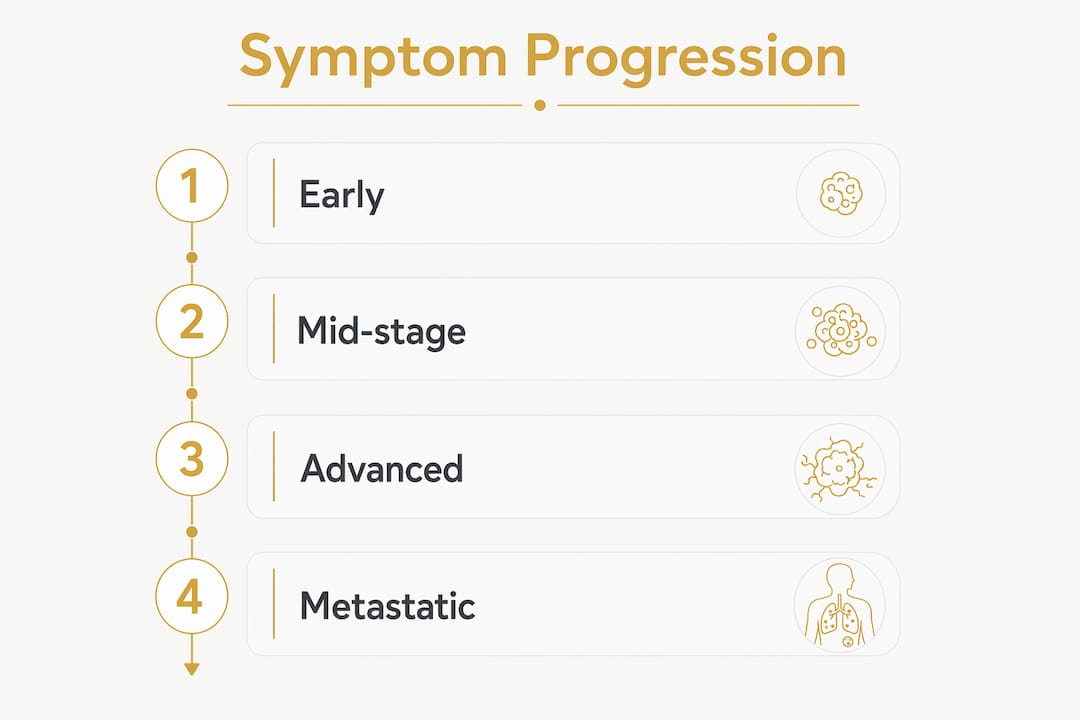
Pseudomyxoma peritonei, or PMP, is a complication where jellylike mucus accumulates in the abdomen, creating pressure on every organ in the abdominal cavity. The belly swells visibly. Eating becomes painful. Patients describe a constant sense of fullness and pressure that does not go away. This is not a subtle symptom. By the time PMP develops, the disease has already progressed significantly.
| Symptom | Stage it typically appears | What it signals |
|---|---|---|
| Lower right abdominal pain | Early to mid | Tumor growth or local irritation |
| Abdominal swelling | Mid to late | Fluid or mucus accumulation |
| Early satiety and nausea | Mid | Pressure on stomach and bowel |
| Unexplained weight loss | Late | Systemic disease burden |
| New abdominal masses | Late | Metastatic spread or PMP |
| Fatigue | Late | Systemic inflammation and malnutrition |
Metastatic spread brings its own set of appendix cancer diagnosis indicators. New lumps or masses in the abdomen, persistent fatigue that sleep does not fix, and rapid unintentional weight loss all point to a disease that has moved beyond its origin. Patients managing persistent abdominal symptoms over months should raise the possibility of appendix cancer explicitly with their doctor, especially if initial tests have come back normal.
Pro Tip: If a doctor tells you your abdominal pain is “nothing to worry about” but it has lasted more than four weeks, ask specifically about imaging. CT scans and MRIs reveal what physical exams and blood tests miss.
What should you do if you notice possible appendix cancer symptoms?
Recognizing a potential appendix cancer warning sign is step one. Acting on it is step two. Here is the practical path forward.
- Note persistence and pattern. Symptoms that last more than two to four weeks without a clear cause deserve medical attention. One episode of abdominal pain is not the same as recurring pain in the same location over a month.
- Start with your primary care provider. A detailed medical history and physical examination are the first diagnostic steps. Tell your doctor exactly where the pain is, when it started, and what other symptoms accompany it.
- Request imaging. CT and MRI scans are essential to visualize appendix tumors and assess whether fluid or mucus has spread. An ultrasound may detect an enlarged appendix but is less definitive for cancer.
- Ask for a specialist referral. If imaging suggests an abnormality near the appendix, a gastroenterologist or surgical oncologist should be involved immediately. Appendix cancer requires specialist expertise that a general practitioner cannot provide alone.
- Do not wait for symptoms to worsen. Symptom persistence and timing are critical indicators when differentiating appendix cancer from common abdominal issues. Early evaluation, even if it turns out to be nothing serious, is always the right call.
An oncology social worker can also help you navigate the emotional and logistical weight of an unexpected diagnosis, especially if cancer is found during surgery for what seemed like a routine appendicitis.
Key Takeaways
Appendix cancer produces no reliable early symptoms, making symptom persistence and advanced imaging the most critical tools for timely detection.
| Point | Details |
|---|---|
| Silent early disease | Appendix cancer causes no symptoms in its earliest stages, so incidental discovery is common. |
| Key warning signs | Persistent lower right abdominal pain, swelling, nausea, and unexplained weight loss are the primary red flags. |
| No screening exists | Colonoscopies cannot reach the appendix; CT and MRI scans are the best available detection tools. |
| Misdiagnosis risk | Symptoms mimic appendicitis and ovarian cancer, making specialist evaluation critical when symptoms persist. |
| Act on persistence | Any abdominal symptom lasting more than four weeks without a clear cause warrants imaging and specialist review. |
Why appendix cancer awareness matters more than most people realize
We at Hcrfwingstocure have watched too many patients arrive at a diagnosis after years of being told their symptoms were “probably nothing.” That pattern is not a failure of medicine alone. It is a failure of awareness, and it is one we can change together.
What strikes me most about appendix cancer is how thoroughly it defies the mental shortcuts we use for cancer in general. People know to check for lumps. They know to watch for blood. Appendix cancer gives you none of those clear signals. It hides behind pain that feels like a pulled muscle or a bad meal. By the time it announces itself loudly, through a swollen belly or a mass found on a scan, it has often been growing quietly for years.
The misconception that appendix cancer is simply a variant of colon cancer is one of the most damaging ideas in this space. Appendix cancer is biologically distinct, and that distinction changes everything about how it should be suspected, diagnosed, and treated. Patients who push back, who ask for imaging when their gut tells them something is wrong, are the ones who get answers. We believe in that kind of informed, determined advocacy. It saves lives.
— HCRF
Hcrfwingstocure: supporting the research that changes outcomes
At Hcrfwingstocure, we believe that every person experiencing unexplained abdominal symptoms deserves access to the best science available. Rare cancers like appendix cancer receive far less research funding than their impact warrants, and that gap costs lives.

The Hippocratic Cancer Research Foundation is a 501©(3) nonprofit that funds “out of the box” cancer research at the Robert H. Lurie Comprehensive Cancer Center of Northwestern University. We support the scientists asking questions no one else is asking, and we share what they learn with patients and families who need it most. Visit Hcrfwingstocure to learn about our current research initiatives, access educational resources on rare cancers, and find out how you can be part of the mission. THEY NEED OUR SUPPORT. We need you.
FAQ
What is the most common sign of appendix cancer?
The most common sign is persistent pain in the lower right abdomen, often accompanied by abdominal swelling or bloating caused by fluid or mucus buildup. Symptoms also include nausea, vomiting, and early fullness after eating.
Can appendix cancer be detected by a colonoscopy?
No. A colonoscopy cannot detect appendix cancer because the appendix is too small and positioned outside the colonoscope’s reach. CT and MRI scans are the primary imaging tools used.
How is appendix cancer different from appendicitis?
Appendicitis causes sudden, severe pain that escalates quickly, while appendix cancer typically causes a dull, persistent ache that develops slowly over weeks or months. Most appendix cancer cases are discovered incidentally during appendicitis surgery, not through planned screening.
What is pseudomyxoma peritonei?
Pseudomyxoma peritonei is a complication of some appendix cancers in which jellylike mucus fills the abdominal cavity. It causes visible belly swelling, chronic discomfort, and difficulty eating as it puts pressure on surrounding organs.
When should you see a doctor about abdominal symptoms?
See a doctor if abdominal pain or swelling persists for more than two to four weeks without a clear cause. Symptom persistence and timing are critical indicators that distinguish appendix cancer from common gastrointestinal issues.
Recommended

An incredible opportunity to hear firsthand updates on the latest in cancer research from the Director of the Robert H. Lurie Comprehensive Cancer Center. Zoom link to follow.
Read More →
See how donor gifts fund $75,000–$200,000 seed grants, generate trial ready data backed by peer reviewed evidence, and how HCRF transparently reports...
Read More →