


Clinical Trial Phases: What Patients and Caregivers Need to Know
August 13, 2026
Clinical Trial Phases: What Patients and Caregivers Need to Know

Clinical trial phases are the staged steps researchers use to test a new treatment in people. Each phase has a specific, regulated purpose: safety and dosing, early efficacy, confirmatory comparison, and post-marketing surveillance. Understanding where a trial sits in that sequence tells you a great deal about what participation will actually feel like, what risks you’re accepting, and what the science is still trying to prove.
According to the NIH’s clinical research basics, trials are commonly organized into four numbered phases, with an optional Early Phase 1 (sometimes called Phase 0) preceding them. Here is what each phase means at a glance:
| Phase | Primary Purpose | Typical Size | Typical Duration | What It Means for You |
|---|---|---|---|---|
| Early Phase 1 (Phase 0) | Micro-dosing, preliminary human data | A very small number | Weeks | Exploratory; very small doses, no therapeutic intent |
| Phase 1 | Safety, tolerability, dosing | Typically between twenty and eighty | Months | You are among the first humans tested; close monitoring, dose escalation |
| Phase 2 | Early efficacy, continued safety | Typically up to several hundred | Months to 2 years | Treatment targets your condition; response rates measured |
| Phase 3 | Confirmatory comparison to standard care | Typically several hundred to a few thousand | 1–4 years | Randomized assignment; may receive standard care or new treatment |
| Phase 4 | Post-approval safety surveillance | Large numbers of participants | Ongoing | You are taking an approved drug; rare effects still being tracked |
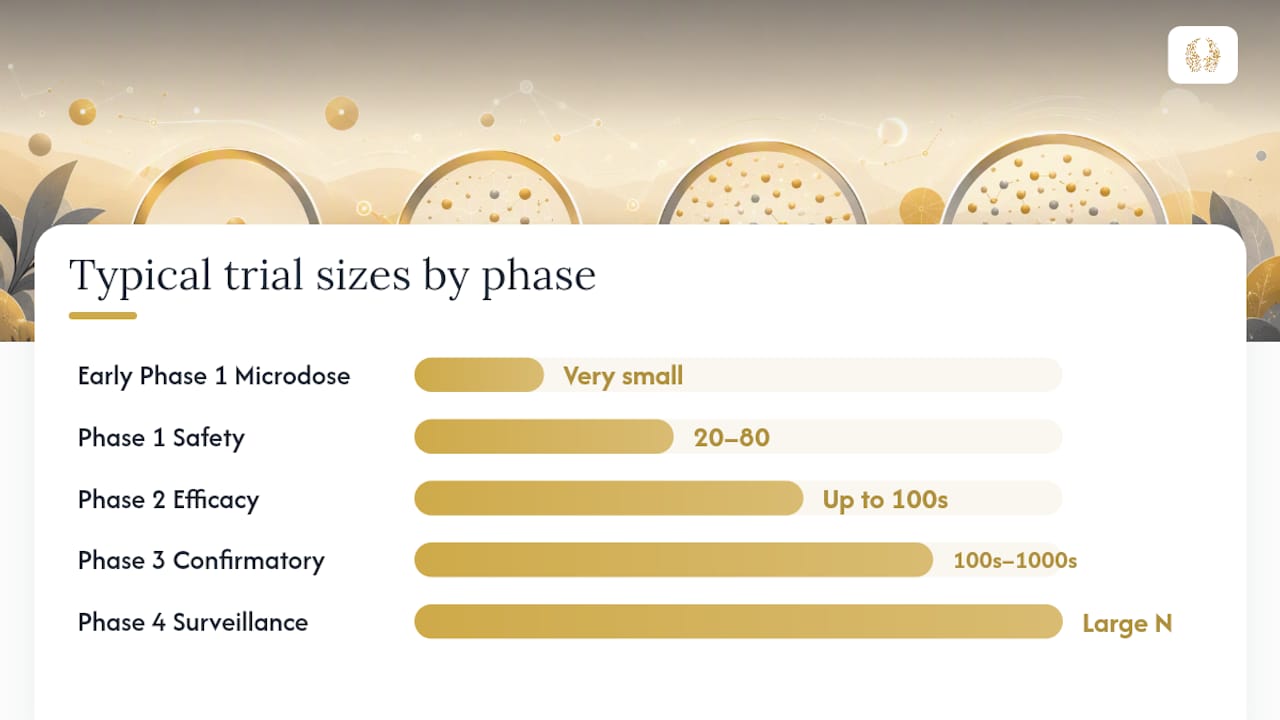
The single most important thing to carry forward: no phase is a guarantee of benefit, but every phase is governed by oversight structures designed to protect you. Your first practical step is to search Clinicaltrials for trials matching your diagnosis and location.
Key Takeaways
Every clinical trial phase serves a distinct, regulated purpose, and understanding that sequence gives patients and caregivers the clarity to ask the right questions and make genuinely informed decisions.
| Point | Details |
|---|---|
| Phase 1 is first-in-human | 20–80 participants; focuses on safety, tolerability, and dosing over months. |
| Phase 2 tests early efficacy | Up to several hundred participants; measures whether the treatment works for a specific condition. |
| Phase 3 is the pivotal stage | 300–3,000+ participants over 1–4 years; randomized comparison to standard care supports FDA approval. |
| Phase 4 continues after approval | Large-scale post-marketing surveillance detects rare or long-term effects in real-world populations. |
| ClinicalTrials.gov is your starting point | Search by condition, phase, and location to find registered, IRB-approved studies near you. |
Table of Contents
- What happens before Phase 1 begins?
- What does Phase 1 actually test, and who participates?
- What does Phase 2 measure, and what should you expect?
- What makes Phase 3 the pivotal stage?
- What is Phase 4, and why does it matter after approval?
- How do trials move between phases, and why do they sometimes stop early?
- How do you find a clinical trial and take the first steps toward joining?
- Common misconceptions patients have about clinical trial phases
- Sources
What happens before Phase 1 begins?
Before any human being receives an experimental treatment, years of preclinical work must happen first. Researchers test the compound in laboratory cell cultures and animal models to understand how it behaves biologically, whether it shows signs of toxicity, and what doses might be relevant for humans. That data forms the foundation of everything that follows.
Once preclinical results look promising, the sponsor (a pharmaceutical company, university, or research institution) submits an Investigational New Drug application (IND) to the FDA. The IND is not an approval to sell a drug. It is a request for permission to begin testing in people, and it must include all preclinical safety data, the proposed study design, and the qualifications of the investigators. The FDA’s clinical research guidance notes that an IND can cover one or more phases and that phases do not always proceed in strict sequence.
The flow looks like this:
- Preclinical research: Lab and animal studies establish safety signals and biological activity.
- IND submission: Sponsor files with the FDA; the agency has 30 days to place a clinical hold or allow the trial to proceed.
- IND accepted: No clinical hold means the trial can start.
- Phase 1 begins: First human testing under the IND framework.
For patients: If you are considering a trial, you can ask the research team for the IND number. Its existence confirms the FDA has reviewed the preclinical package and allowed human testing to proceed.
What does Phase 1 actually test, and who participates?
Phase 1 is the first time an experimental treatment enters a human body. The primary goals are safety, tolerability, how the body processes the drug (pharmacokinetics), and finding the right dose range. Per 21 CFR § 312.21, Phase 1 studies typically enroll 20–80 subjects and are designed to gather the information needed to design Phase 2.
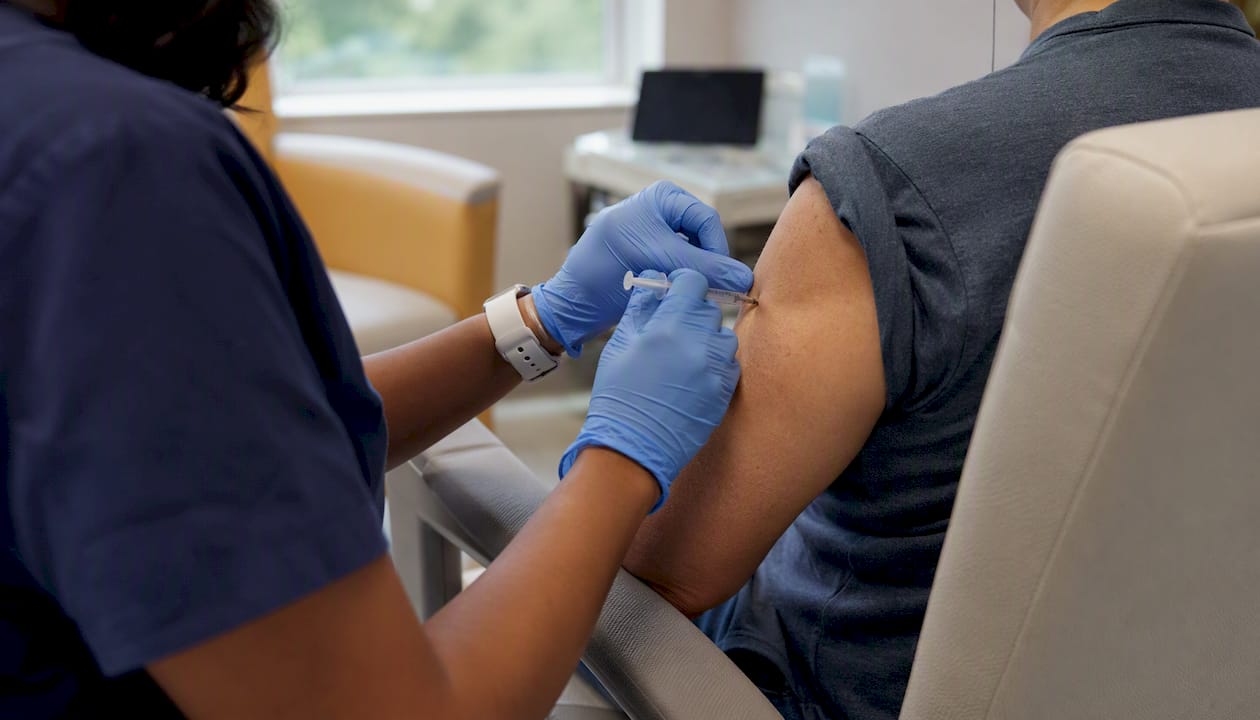
In most disease areas, Phase 1 recruits healthy volunteers. Oncology is a significant exception. Because cancer drugs are often highly toxic at therapeutic doses, enrolling healthy people would be unethical. Phase 1 cancer trials typically recruit patients who have exhausted standard options, which means you may be eligible even when other treatments have stopped working.
Common Phase 1 design features include:
- Single-ascending-dose (SAD) and multiple-ascending-dose (MAD) designs: Small groups receive progressively higher doses so researchers can identify where side effects emerge.
- Sentinel dosing: The first one or two participants in a cohort receive the drug before the rest, giving the team a safety read before expanding.
- Expedited safety reporting: Under 21 CFR 312.32, serious unexpected adverse events trigger 7-day or 15-day reporting windows to the FDA. Monitoring is most intensive here, per participant, of any phase.
Risks are real and real-time. You may experience side effects that have never been documented in humans. The benefit is that you receive more individual attention from the research team than at almost any other stage of drug development.
Pro Tip: Before enrolling in a Phase 1 trial, ask the study coordinator: “How does sentinel dosing work in this protocol, and what happens if the first participant has a serious adverse event?” Their answer tells you how the team handles uncertainty.
What does Phase 2 measure, and what should you expect?
Phase 2 shifts the central question from “Is this safe enough to keep testing?” to “Does this actually work?” These are controlled studies designed to evaluate effectiveness for a specific indication and to document common short-term side effects. According to the FDA’s drug development overview, Phase 2 trials typically include up to several hundred subjects and last from several months to about two years.
Participants in Phase 2 have the condition the drug is meant to treat. In cancer trials, for example, the team might measure tumor response rate (the percentage of patients whose tumors shrink by a defined amount) or progression-free survival. In an antiviral trial, the endpoint might be viral load reduction. These are called surrogate endpoints because they predict clinical benefit without waiting years for survival data.
Sponsors often subdivide Phase 2 internally:
- Phase 2a: Dose-ranging and proof-of-concept. Does the drug produce a measurable biological effect at a tolerable dose?
- Phase 2b: Dose confirmation. Which specific dose should move into the larger Phase 3 program?
This subdivision is a sponsor strategy, not a formal regulatory category. Regulators see it as one Phase 2 program. What matters to you as a participant is that Phase 2 results directly shape whether a Phase 3 trial gets funded and designed, and what dose you would receive in it. A strong Phase 2 signal carries real hope forward.
What makes Phase 3 the pivotal stage?
Phase 3 is where a treatment earns its credentials. These are large, confirmatory studies designed to prove that the new treatment works better than (or at least as well as) the current standard of care, in a population representative of the patients who would actually use it. The CASRAI clinical trial phases guide describes Phase 3 studies as typically enrolling several hundred to several thousand subjects, providing the evidence base for physician labeling and regulatory submissions like the NDA or BLA.
| Dimension | Phase 3 Details |
|---|---|
| Purpose | Confirm efficacy and safety; support NDA/BLA submission |
| Typical size | 300–3,000+ participants, often multi-site |
| Typical duration | 1–4 years |
| Primary outcomes | Survival, disease-free survival, quality of life, symptom relief |
| Main uncertainties | Rare adverse events may still be undetected; subgroup effects may vary |
Key design features you will encounter as a participant:
- Randomization: You are assigned to a treatment group by chance, not by your doctor’s preference. This removes selection bias.
- Control arms: You may receive the current standard of care, a placebo (only when no proven standard treatment exists and withholding it is ethical), or a combination.
- Blinding: In double-blind trials, neither you nor your care team knows which treatment you are receiving until the trial ends or a safety review requires unblinding.
- Follow-up requirements: Phase 3 trials often require regular clinic visits, lab draws, and imaging over months or years.
The NCI’s guide on how clinical trials work emphasizes that informed consent is central to this process. Before you are randomized, you must receive a full explanation of the study’s purpose, procedures, risks, and alternatives, and you must sign a consent form. You can withdraw at any time.
What is Phase 4, and why does it matter after approval?
FDA approval does not mean a drug’s story is finished. Phase 4 studies begin after a treatment reaches the market, and their purpose is to detect rare or long-term adverse effects that simply could not surface in trials of a few thousand people over a few years. In a population of millions, a side effect occurring in 1 in 10,000 patients becomes visible.
Phase 4 programs include:
- Post-marketing surveillance registries: Large cohorts tracked over years, often through electronic health records.
- FDA-required post-marketing studies: The agency can require sponsors to conduct specific studies as a condition of approval.
- Pharmacovigilance reporting: Safety reporting shifts from the intensive IND framework (7-day/15-day windows) to periodic adverse-event reporting under approved-product rules, as described in the CASRAI phases guide.
What this means for patients taking an approved drug: your individual monitoring is less intensive than in a Phase 1 trial, but the population-level surveillance is broader. Real-world safety signals have changed drug labels, added black-box warnings, and in some cases led to market withdrawals. Phase 4 is not a formality. It is where the full picture of a drug’s safety profile gets written.
How do trials move between phases, and why do they sometimes stop early?
Drug development is not a straight line. The FDA explicitly notes that phases are not necessarily conducted in strict sequence. Sponsors frequently use combined designs:
- Phase 1/2 trials: Safety and early efficacy are evaluated in a single protocol, often using a seamless adaptive design that expands the cohort once a safe dose is confirmed.
- Phase 2/3 trials: A large Phase 2 program is pre-specified to roll directly into Phase 3 if interim results meet defined thresholds.
These accelerated structures are especially common in oncology, where patients need answers faster.
Trials stop early for several reasons:
- Safety concerns: A Data Safety Monitoring Board (DSMB) reviews unblinded data at intervals. If harm is clear, the trial halts.
- Futility: Interim analysis shows the treatment is unlikely to meet its primary endpoint even if the trial continues.
- Overwhelming benefit: Rarely, results are so positive that continuing a placebo arm becomes unethical.
- Sponsor decisions: Funding, strategic priorities, or manufacturing issues can end a trial independent of the science.
Short glossary for patients:
- IND (Investigational New Drug): FDA authorization to begin human testing.
- NDA (New Drug Application) / BLA (Biologics License Application): The regulatory filing requesting approval to market a drug or biologic after Phase 3.
- DSMB (Data Safety Monitoring Board): An independent committee that reviews unblinded safety data during a trial.
- IRB (Institutional Review Board): An independent ethics committee that reviews and approves trial protocols to protect participants.
- Informed consent: The process by which you are fully educated about a trial before agreeing to join.
How do you find a clinical trial and take the first steps toward joining?
Knowing the phases is one thing. Finding a trial that fits your situation is another. Here is a practical sequence:
- Start at ClinicalTrials.gov. This is the U.S. government’s official registry, maintained by the NIH, listing tens of thousands of studies. Filter by condition, phase, location, and age.
- Use NIH and NCI resources. The National Cancer Institute’s website offers disease-specific trial finders and plain-language explanations of eligibility.
- Contact academic cancer centers directly. Institutions like MD Anderson Cancer Center and the Robert H. Lurie Comprehensive Cancer Center of Northwestern University run early-phase trials that may not be widely advertised. Calling their clinical trials offices directly often surfaces options that a database search misses.
- Read the trial entry carefully. Every ClinicalTrials.gov listing includes the phase, sponsor, primary contact, inclusion and exclusion criteria, and study status. “Recruiting” means spots are open.
- Call the study coordinator, not the principal investigator. Coordinators handle eligibility screening and can tell you within minutes whether you are likely to qualify.
- Bring these documents to your screening visit: recent pathology reports, imaging results, a list of current medications, and your insurance information.
Questions worth asking the research team:
- Who pays for study-related care and tests?
- What happens if I experience a serious side effect?
- How often do I need to come in, and for how long?
- What are my alternatives if I do not join?
- Is there a DSMB reviewing safety data?
To verify a trial’s legitimacy: confirm IRB approval is listed in the protocol, check that the trial is registered on ClinicalTrials.gov (registration is required by law for most U.S. trials), verify the sponsor’s contact information independently, and ask for a copy of the informed consent document before your screening visit.
Common misconceptions patients have about clinical trial phases
“There is a Phase 5.” There is not. The FDA recognizes four numbered phases plus Early Phase 1. “Phase 5” is sometimes used informally to describe extended real-world evidence programs or long-term registries, but it carries no regulatory definition in the United States, as the CASRAI guide confirms.
“I will definitely get a placebo.” Not necessarily. Placebos are only used when no proven standard treatment exists and withholding active care is ethically justified. In most cancer trials, the control arm receives the current standard of care, not a sugar pill. Blinding (where neither you nor your doctor knows which arm you are in) is common in Phase 3, but you will always be told whether a placebo is possible before you consent.
“Most experimental treatments eventually get approved.” The progression rates are sobering. Many treatments that show promise in Phase 2 do not meet their endpoints in Phase 3. Failure is not a scandal; it is the system working as intended, protecting patients from treatments that do not actually deliver what early signals suggested.
“If I don’t meet the inclusion criteria, I’m out of options.” Exclusion from one trial does not close every door. Criteria are specific to that protocol’s scientific questions. A different trial for the same condition may have different eligibility windows. Ask the coordinator whether any related studies are open, and ask your oncologist about expanded access programs.
Pro Tip: Before signing a consent form, verify three things: the trial is listed on ClinicalTrials.gov, the IRB approval number is documented in the consent document, and a DSMB or equivalent safety monitoring committee is named in the protocol. All three should be present in any legitimate U.S. trial.
A note from the Hippocratic Cancer Research Foundation
The Hippocratic Cancer Research Foundation (HCRF) is a 501©(3) nonprofit that funds “out of the box” cancer research at the Robert H. Lurie Comprehensive Cancer Center of Northwestern University. We believe that understanding the clinical trial process is itself a form of hope. When patients and caregivers know what each phase means, they can ask better questions, make more informed decisions, and participate in the science that may one day change outcomes for everyone who comes after them.
HCRF supports trial awareness through educational materials, donor-funded research programs, and direct connection to the Lurie Cancer Center’s clinical research teams. If you or someone you love is navigating a cancer diagnosis and wants to understand what trials might be available, we are here. Visit the Hippocratic Cancer Research Foundation to learn about the research we support and how to connect with our team.

Sources
- The Basics | National Institutes of Health (NIH)
- Step 3: Clinical Research - FDA
- 21 CFR § 312.21 - Phases of an investigation. | LII / Legal Information Institute
- How Do Clinical Trials Work? - NCI
- Clinical Trial Phases: FDA Definitions & Roles — CASRAI
This article is general information, not a substitute for advice from a qualified doctor. Consult a qualified healthcare professional about your own circumstances before acting on anything here.
Recommended
- Hippocratic Cancer Research Foundation: Innovative Therapies | Immunotherapy Clinical Trials for Lung Cancer: Your Guide
- Hippocratic Cancer Research Foundation: Innovative Therapies | Pancreatic Cancer Clinical Trials: Immunotherapy Guide
- Hippocratic Cancer Research Foundation: Innovative Therapies | Immunotherapy Clinical Trials for Prostate Cancer: 2026 Guide
- Hippocratic Cancer Research Foundation: Innovative Therapies | Supplements to Avoid During Immunotherapy: A Patient Guide

Discover how the tumor microenvironment influences cancer growth and treatment resistance, and why understanding it is vital for oncology professionals.
Read More →
Learn how to make anonymous charitable gifts without losing tax benefits. Practical, tax aware steps, DAF options, required documentation, and HCRF's...
Read More →