


One FDA Approved Option: How Oncolytic Virus Therapy Turns Tumors Hot
September 15, 2026
One FDA Approved Option: How Oncolytic Virus Therapy Turns Tumors Hot

Oncolytic virus therapy uses viruses engineered or naturally suited to infect and destroy cancer cells while leaving healthy tissue mostly alone, then triggers the immune system to keep attacking the tumor. One version, Imogene laherparepvec, sold as Imlygic, holds FDA approval for certain melanoma lesions. Most other oncolytic viruses remain investigational, tested in clinical trials for brain, lung, and other solid tumors.
TL;DR:
- Only one oncolytic virus, T-VEC, has full FDA approval in the U.S. for melanoma, while others like DNX-2401 and G207 remain investigational or approved elsewhere.
- The therapy works through two mechanisms: direct tumor cell lysis via viral replication and activation of the immune system, which can convert “cold” tumors into immune-active “hot” ones.
- Delivery methods include intratumoral injections for accessible tumors and systemic routes under experimental carriers; the choice affects treatment feasibility and trial design.
- Clinical trial results are promising but limited by small sample sizes, varied endpoints, and potential pseudoprogression, requiring careful interpretation before establishing effectiveness.
- Support from specialized centers, understanding regulatory differences internationally, and early-stage research funding are crucial to advancing oncolytic virus therapy.
Table of Contents
- How Does Oncolytic Virus Therapy Work?
- Which Oncolytic Viruses Are Approved or in Trials?
- What Do Clinical Trials Show So Far?
- How Is Oncolytic Virus Therapy Delivered?
- What Are the Side Effects of Oncolytic Virus Therapy?
- Who Qualifies for Oncolytic Virus Therapy?
- HCRF’s Research Focus on the Tumor Microenvironment
- Where Can You Find Support and Counseling for OV Therapy Decisions?
- How Do You Find a Specialist or Treatment Center?
- Is Oncolytic Virus Therapy Approved Everywhere?
- Why HCRF Believes This Research Deserves Support
- Support Research That Targets Tumors Differently
- Sources
- FAQ
How Does Oncolytic Virus Therapy Work?
The mechanism has two acts, not one. First comes oncolysis: the virus enters tumor cells preferentially, hijacks their machinery to replicate, and bursts them open. Cancer cells often have weakened antiviral defenses compared to healthy cells, which is why the virus can multiply there and mostly spare surrounding tissue. That selectivity is the whole premise. It is also why researchers describe oncolytic viruses as a form of non-specific tumor therapy with a specific trigger: the virus doesn’t need to recognize a particular mutation to find its target, it just needs a cell environment permissive enough to let it replicate.
The second act matters more for long-term outcomes. When tumor cells rupture, they don’t die quietly. They release damage-associated molecular patterns (DAMPs) and pathogen-associated molecular patterns (PAMPs), essentially chemical alarm signals that recruit dendritic cells and prime CD8+ T cells to recognize the tumor as a threat. Researchers call this process immunogenic cell death, and the it is the mechanism that separates oncolytic viruses from older forms of viral treatment that simply tried to kill cells directly. Fukuhara and colleagues describe oncolytic virus therapy as working through this combination of direct lysis and induced antitumor immunity, not lysis alone.
That immune activation is why oncologists increasingly talk about oncolytic viruses less as a standalone weapon and more as a way to change the immune response in cancer altogether. Many solid tumors are what researchers call “cold”: they carry few infiltrating immune cells, and checkpoint inhibitors have little to unleash there. An oncolytic virus infection turns up local inflammation, draws immune cells into the tumor, and can convert that cold environment into a “hot” one where T cells are present and active. A review on tumor microenvironment reprogramming frames this conversion as the central reason oncolytic viruses and checkpoint inhibitors are now being tested together so often.
What that mechanism actually accomplishes, in practical terms:
- Direct destruction of infected tumor cells through viral replication and lysis.
- Release of DAMPs and PAMPs that alert the innate immune system to the tumor’s presence.
- Recruitment and activation of dendritic cells, which then prime tumor-specific T cells.
- Local remodeling of the tumor microenvironment from immune-excluded to immune-active.
- A rationale for pairing oncolytic viruses with immune checkpoint inhibitors, since the virus can supply the T cell activity checkpoint drugs need to work.
Combination timing appears to matter. Evidence gathered across clinical trials of oncolytic virotherapy combined with checkpoint blockade suggests that giving the virus first, then layering on concurrent checkpoint inhibition, may sustain T cell activity longer and delay the exhaustion that blunts immunotherapy responses, according to a review of oncolytic virotherapy combination strategies. Sequence and dose spacing are becoming almost as important as the virus itself.
Pro Tip: If you’re reading a trial description that lists oncolytic virus therapy “in combination with” a checkpoint inhibitor, check whether the virus is given before or alongside the immune drug. The order isn’t incidental. It reflects a specific hypothesis about how to keep T cells engaged with the tumor longer.
None of this guarantees a durable remission on its own. But the two-part mechanism, kill locally, then recruit immune attention broadly, is why oncolytic viruses keep showing up in combination trials rather than fading out as a one-trick therapy.
Which Oncolytic Viruses Are Approved or in Trials?
Only one oncolytic virus currently carries full FDA approval in the United States. The rest, including several with striking early results, remain confined to clinical trials or hold approval elsewhere. Knowing which is which will save you time when reading trial listings or news coverage that blurs the distinction.
- Talimogene laherparepvec (T-VEC, Imlygic): A modified herpes simplex virus approved by the FDA for certain unresectable metastatic melanoma lesions. It’s given by direct intralesional injection into visible or palpable tumors, typically on a repeating schedule over weeks or months.
- DNX-2401 (Delta-24-RGD): An engineered adenovirus studied mainly in glioblastoma and other high-grade gliomas. It remains investigational in the United States, tested through intratumoral delivery in trials for adult and pediatric brain tumors.
- G207: A modified herpes simplex virus studied in pediatric and adult brain tumors, including trials examining direct infusion into surgical resection cavities. It is not FDA-approved and is available only through clinical trials.
- G47∆: A third-generation herpes-based oncolytic virus that has produced notable published results in glioblastoma trials. It received conditional regulatory approval in Japan for malignant glioma, a jurisdictional distinction worth noting, since that status does not extend to the United States, where it remains investigational.
The gap between “approved somewhere” and “approved here” trips up a lot of people searching for treatment options. A therapy cleared for use in Japan or the European Union isn’t automatically available at a U.S. cancer center, and a promising phase I result isn’t the same as regulatory clearance anywhere. Each of these viruses uses a different vector, herpes simplex, adenovirus, and each targets a different cancer type with its own dosing schedule and delivery route. When you see one of these names mentioned in a headline about a “breakthrough,” check whether the article is describing a completed approval or an early trial result. Those are two very different stages, and conflating them is the most common error in patient-facing coverage of oncolytic viruses cancer research.
What Do Clinical Trials Show So Far?
The evidence base for oncolytic virus therapy is real but still early for most agents beyond T-VEC. Reading it well means understanding both what trials have found and where their limitations sit.
Start with ClinicalTrials.gov if you want to look at trials yourself. Search the site using the virus name (DNX-2401, G207) or the broader term “oncolytic virus” plus your cancer type. Each listing shows the trial’s phase, which tells you a lot about how much confidence to place in the results:
- Phase I trials test safety and dosing in small groups, often fewer than 30 participants. Results here answer “is this safe and tolerable,” not “does this work.”
- Phase II trials expand the group and start looking at efficacy signals, like tumor response rate or progression-free survival, but usually still lack a control arm large enough for statistical certainty.
- Phase III trials compare the therapy against a standard treatment or placebo in a much larger population. T-VEC’s approval rested on a Phase III trial; most other oncolytic viruses have not reached this stage.
A review of recent clinical trials in high-grade glioma found that intratumoral inoculation with agents including G47∆, DNX-2401, and G207 was generally safe in both adult and pediatric patients, and repeat dosing showed encouraging survival signals compared to historical controls for these notoriously hard-to-treat tumors. That same body of research found that repeat dosing correlated with increased tumor-infiltrating lymphocytes in some glioma trials, hinting that multiple smaller doses might outperform a single large one, a finding that is reshaping how newer trials are designed.
T-VEC’s own combination trials with checkpoint inhibitors have produced mixed but sometimes encouraging response data. A broader review of oncolytic virotherapy and immunogenic cell death notes that combining oncolytic viruses with checkpoint blockade has clear biological rationale and some improved response signals in early studies, but cautions that randomized trial results have been inconsistent enough that firm conclusions about added benefit still require more data.
Three limitations show up again and again across this literature, and they’re worth understanding before you get attached to a single headline number:
- Small cohorts. Many of the most-cited results come from Phase I or II trials with a few dozen participants. Promising numbers in a small group don’t always hold in a larger, randomized comparison.
- Endpoint heterogeneity. One trial might report objective response rate, another progression-free survival, another overall survival at 12 months. These aren’t interchangeable, and comparing across studies casually can mislead you about which therapy is actually “better.”
- Pseudoprogression on imaging. Because oncolytic viruses cause local inflammation, a tumor can look larger on a scan shortly after treatment even when the therapy is working. This inflammatory swelling can be mistaken for disease progression, complicating how oncologists judge success on standard imaging timelines.
Pro Tip: If your care team mentions a scan that looks worse right after starting oncolytic virus therapy, ask specifically whether they suspect pseudoprogression before assuming the treatment has failed. Researchers are testing alternative imaging approaches, including CD8-targeted PET scans, precisely because standard imaging struggles to tell inflammation apart from true tumor growth in these cases.
None of this means the trial data is weak. It means the data is early, and reading it with those three caveats in mind will keep you from over-interpreting a single promising abstract.
How Is Oncolytic Virus Therapy Delivered?
Getting the virus to the tumor, and keeping it there long enough to work, is one of the field’s hardest engineering problems. Two main routes exist, and each carries distinct tradeoffs.
- Intratumoral injection delivers the virus directly into an accessible tumor, the approach used for T-VEC in skin and lymph node melanoma lesions and for several brain tumor trials during or after surgical resection. It concentrates the dose where it’s needed and limits systemic exposure, but it only works when a tumor can be physically reached with a needle or catheter, which rules it out for many internal or metastatic cancers.
- Repeat dosing has become a meaningful innovation rather than an afterthought. Glioma trials using repeated intratumoral doses over weeks showed the approach was tolerable and, in some cases, correlated with a stronger immune presence inside the tumor than single-dose protocols.
- Systemic (intravenous) delivery would, in theory, reach tumors anywhere in the body, including metastases you can’t inject directly. In practice, it runs into the immune system’s own defenses: the body often clears the virus or builds neutralizing antibodies before it reaches the tumor in meaningful concentration.
- Emerging carrier technology is trying to solve that systemic problem. Researchers are testing cellular carriers that shuttle virus particles inside immune or stem cells to shield them from antibody detection, along with nanoparticle coatings designed to help the virus evade immune clearance long enough to reach tumor tissue, according to a review of advances in oncolytic virotherapy delivery.
- Imaging-guided administration is increasingly used for internal tumors that aren’t visible or palpable from the skin, allowing catheter-based injection under CT or ultrasound guidance rather than surgical exposure.
The practical takeaway: if a tumor is visible or surgically accessible, intratumoral delivery is the more mature, better-tested route today. If it isn’t, you’re likely looking at a trial testing one of the systemic delivery workarounds, and those remain a more experimental frontier.
What Are the Side Effects of Oncolytic Virus Therapy?
Most people tolerate oncolytic virus therapy reasonably well, with side effects that resemble a mild viral illness rather than the harsher toxicity profile associated with chemotherapy. That said, a smaller set of more serious risks deserves attention, especially for therapies delivered directly into the brain or bloodstream.
- Common, short-term effects: fever, chills, fatigue, muscle aches, and pain or swelling at the injection site. According to the American Cancer Society, these symptoms typically appear within a day or two of treatment and resolve on their own, similar to a flu-like reaction.
- Less common but more serious risks: cytokine-release syndrome, a systemic inflammatory reaction that can cause a rapid drop in blood pressure or breathing difficulty, and neurotoxicity in trials delivering virus directly into brain tissue, including confusion, seizures, or swelling around the injection site.
- Viral shedding: because these are live, replicating viruses, patients may shed viral particles for a period after treatment. Clinical teams give specific precautions around contact with pregnant people, infants, and immunocompromised household members during this window.
- Monitoring protocols: most trials and approved treatment protocols include close observation for several hours after the first dose, followed by scheduled check-ins to track fever, injection-site reactions, and neurologic status for CNS-directed therapies.
If you or a loved one develops a high fever that doesn’t resolve within the expected window, sudden confusion, difficulty breathing, or unusual swelling at an injection or infusion site, contact the treating care team the same day rather than waiting for a scheduled follow-up. Serious adverse events tied to oncolytic virus therapy are uncommon, but they can escalate quickly enough that early reporting matters more than with a typical flu-like reaction.
Who Qualifies for Oncolytic Virus Therapy?
Eligibility patterns vary by trial and by approved indication, but a few themes repeat across most programs. Patients are usually considered after standard treatments have stopped working or aren’t a good fit, tumors need to be reachable for intratumoral approaches, and there’s typically a required window since the last chemotherapy, radiation, or surgery to let the body recover enough to tolerate a new agent.
Before treatment starts, expect a thorough workup: bloodwork, imaging to map tumor location and accessibility, and sometimes a biopsy to confirm the tumor type still matches what the trial or approved indication targets. After treatment, imaging follow-up is scheduled at intervals the protocol defines, often with extra attention paid to distinguishing true progression from pseudoprogression, the inflammatory swelling discussed earlier that can mimic worsening disease on a scan.
If you’re weighing whether to pursue this route, a short list of direct questions can clarify where you stand:
- Is my tumor type and stage a documented eligibility criterion for this specific therapy or trial?
- How long has it been since my last treatment, and does that meet the trial’s required washout window?
- Is my tumor accessible for intratumoral delivery, or would I need a systemic or imaging-guided approach?
- What does the imaging follow-up schedule look like, and how will the team distinguish pseudoprogression from true progression?
- What clinical trial eligibility criteria apply beyond tumor type, such as organ function or prior therapy limits?
Bring this list to your oncologist or a trial coordinator. Specific answers here matter far more than general reassurance.
HCRF’s Research Focus on the Tumor Microenvironment
The Hippocratic Cancer Research Foundation directive directs donor support toward the kind of “out of the box” research that oncolytic virus therapy represents: work aimed at reprogramming how tumors interact with the immune system rather than attacking cancer cells through chemotherapy alone. That focus on the tumor microenvironment sits at the center of why early-phase trials matter so much right now.
Supporting research at this stage is not glamorous work. Early-phase trials rarely make headlines, and the path from a promising lab result to an approved therapy at scale, like T-VEC’s, can take a decade or longer. That is exactly the gap philanthropic research funding exists to fill.
For readers who want to go deeper on how tumors resist and sometimes yield to immune-based treatment, HCRF maintains educational resources built for patients and caregivers navigating this landscape, including:
- A primer explaining how the tumor microenvironment shapes immunotherapy response.
- Coverage of innovative cancer research initiatives supported through donor funding at the Robert H. Lurie Comprehensive Cancer Center of Northwestern University.
Where Can You Find Support and Counseling for OV Therapy Decisions?
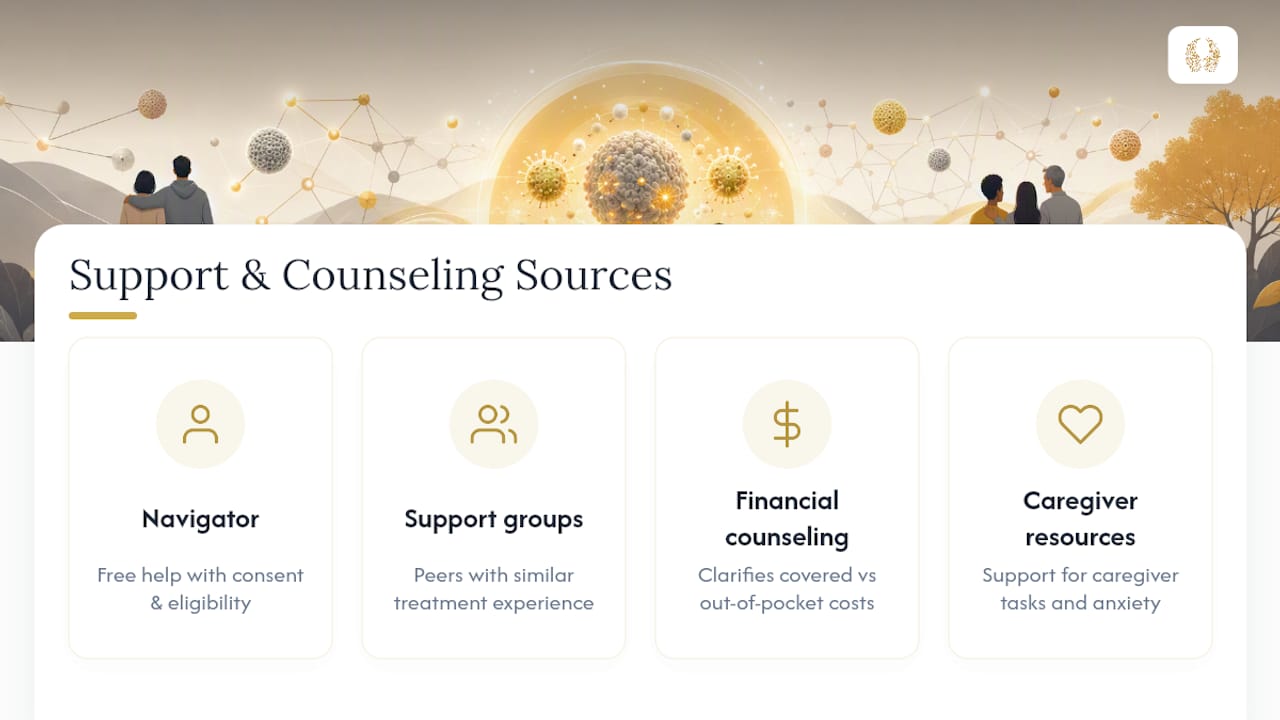
Deciding whether to pursue oncolytic virus therapy, especially through a clinical trial rather than an approved treatment, is rarely a decision anyone should make alone. Most academic cancer centers running these trials have oncology social workers and patient navigators specifically trained to help families weigh trial participation against standard-of-care alternatives.
Ask your treating oncologist directly whether the cancer center has a patient navigation program, since these services are usually free and exist specifically to help you interpret trial paperwork, consent forms, and eligibility criteria that can otherwise feel dense and confusing. Many centers also connect patients with support groups specific to their cancer type, which matters more than it might sound: hearing from someone who has actually gone through intratumoral injections or systemic viral therapy answers questions a pamphlet never will.
Financial counseling deserves equal attention early, not as an afterthought once treatment is underway. Trial-based therapies sometimes cover the experimental treatment itself at no cost to the patient, but related expenses, travel, lodging, additional imaging, can still add up. Ask the trial coordinator directly what costs the study covers versus what falls to your insurance or out-of-pocket budget.
Caregivers need support too, and it’s easy to overlook. Managing a loved one through fever spikes, injection-site care, or the anxiety of waiting on scan results is its own kind of labor. Cancer centers increasingly build caregiver-specific resources into their support programs, and it’s worth asking about them explicitly rather than assuming they don’t exist.
How Do You Find a Specialist or Treatment Center?
Oncolytic virus therapy, whether the approved T-VEC or an investigational agent, is concentrated at academic medical centers and comprehensive cancer centers rather than community oncology practices. That concentration is partly regulatory and partly practical: administering a live virus therapy and monitoring for the rarer serious side effects requires infrastructure most smaller clinics don’t maintain.
Start with the National Cancer Institute’s list of NCI-designated cancer centers, which run the majority of oncolytic virus trials in the United States. If you’re specifically looking for a trial rather than the approved T-VEC treatment, ClinicalTrials.gov lets you filter by cancer type, location, and recruiting status, and each listing names the principal investigator and study site directly.
A referral from your current oncologist is often the fastest path in practice. Oncologists at community practices frequently maintain relationships with academic centers precisely for cases like this, where a patient needs access to a therapy or trial outside their standard scope. Ask specifically: “Is there an oncolytic virus trial or treatment relevant to my cancer type, and can you refer me to that center?”
Distance and travel logistics are worth raising immediately, since intratumoral or repeat-dose protocols can require frequent visits over weeks or months, unlike a single outpatient procedure. Some centers offer telehealth follow-up for portions of monitoring, but the initial treatment and imaging typically require being on-site. Understanding that commitment upfront, before committing to a trial three states away, saves considerable stress later.
Is Oncolytic Virus Therapy Approved Everywhere?
Regulatory status for oncolytic virus therapy varies significantly by country, and that variation explains a lot of the confusion patients encounter when researching treatment options online.
In the United States, the FDA has approved exactly one oncolytic virus therapy: T-VEC, for certain metastatic melanoma lesions. Everything else discussed in this article, DNX-2401, G207, and G47∆, remains investigational here, available only through enrollment in a clinical trial.
Other countries have moved differently. Japan granted conditional, time-limited approval to G47∆ for malignant glioma, a regulatory pathway distinct from the FDA’s standard approval process and one that requires ongoing data collection to maintain that status. That approval does not transfer to the United States or extend automatically if the drug’s developers seek broader international clearance; each regulatory body evaluates its own trial data independently.
This patchwork matters practically for two reasons. First, a therapy approved abroad isn’t something a U.S. patient can simply request from an American oncologist, access typically requires either traveling to a country where it’s approved or enrolling in a U.S. trial testing the same or a similar agent. Second, regulatory approval processes differ enough in their evidence requirements that “approved in Country X” doesn’t guarantee the same safety and efficacy standard the FDA requires, or vice versa. When you read that an oncolytic virus has been “approved,” the honest next question is always: approved where, for what indication, and under what regulatory pathway.
Why HCRF Believes This Research Deserves Support
We fund research into the tumor microenvironment and early-phase oncolytic virus trials because this is exactly the kind of work that struggles to attract traditional funding: too early for pharmaceutical investment, too specialized for general research grants. Success here would mean more patients with refractory tumors having a real option beyond standard chemotherapy.
If you or someone you love is considering this path, talk to a specialized cancer center and a trial investigator directly. HCRF’s clinical trial eligibility resources exist to help you ask the right questions.
— HCRF
Support Research That Targets Tumors Differently
The therapies described in this article exist because researchers pursued unconventional ideas long before they became standard treatment options, and that pattern of funding “out of the box” science is exactly what HCRF exists to sustain. Support is provided for early-phase research into the tumor microenvironment and immune-based approaches like oncolytic virus therapy at the Robert H. Lurie Comprehensive Cancer Center of Northwestern University, funding the kind of work that’s too early for commercial investment but important to advance.

If this article gave you a clearer picture of where oncolytic virus therapy stands today, consider what it takes to move that science forward: donor support, sustained over years, for researchers willing to test approaches that don’t have a guaranteed payoff. Visit the Hippocratic Cancer Research Foundation site to learn more about current research priorities, or reach out directly if you or a loved one needs help understanding trial options. If you’re specifically looking for an active oncolytic virus trial, ClinicalTrials.gov remains the most direct place to search by cancer type and location. Every donation to HCRF goes toward funding the next stage of research that therapies like these depend on.
Sources
- Oncolytic Virus Therapy: Using Tumor-Targeting Viruses to Treat Cancer — NCI
- Recent clinical trials reveal path forward for oncolytic virotherapy in adult and pediatric high-grade glioma — PMC
- Oncolytic virus therapy: A new era of cancer treatment at dawn — PMC (Fukuhara et al.)
- Oncolytic virus therapy and its side effects — American Cancer Society
- Recent advances in oncolytic virotherapy: insights from clinical trials and combination treatment strategies — Virology Journal
This article is general information, not a substitute for advice from a qualified doctor. Consult a qualified healthcare professional about your own circumstances before acting on anything here.
FAQ
How Successful Is Oncolytic Virus Therapy?
Success varies widely by agent and cancer type: T-VEC has demonstrated tumor shrinkage sufficient for FDA approval in certain melanoma lesions, while most other oncolytic viruses remain in early-phase trials showing safety and encouraging but not yet definitive efficacy signals, particularly in high-grade glioma.
Can You Give an Example of Oncolytic Virus Therapy?
Talimogene laherparepvec, sold as Imlygic, is the clearest example: a modified herpes virus injected directly into melanoma lesions that both destroys tumor cells and triggers an immune response against the cancer.
What Are the Risks of Oncolytic Virus Therapy?
Most patients experience mild, flu-like effects such as fever, chills, and injection-site pain, but rarer serious risks include cytokine-release syndrome and, for brain-directed therapies, neurotoxicity, according to the American Cancer Society.
What Are Some Examples of Oncolytic Viruses?
Beyond the FDA-approved T-VEC, notable investigational examples include DNX-2401 (Delta-24-RGD) and G207, both studied in brain tumors, and G47∆, which holds conditional approval in Japan for malignant glioma but remains investigational in the United States.
Is Oncolytic Virus Therapy the Same as Chemotherapy?
No. Chemotherapy uses cytotoxic drugs to kill rapidly dividing cells broadly, while oncolytic virus therapy uses a virus that preferentially infects tumor cells and then activates the immune system against the cancer, a fundamentally different mechanism.
Recommended

Learn how to distinguish moles versus melanoma with key criteria. Early detection can save lives. Protect your skin today!
Read More →
Compare CharityWatch, Charity Navigator, BBB WGA and GiveWell. Learn what each rating measures, which documents to verify, and a five-step donor checklist.
Read More →