

Innovative Cancer Research: The Breakthroughs Moving Toward Patients
August 28, 2026
Innovative Cancer Research: The Breakthroughs Moving Toward Patients

The five innovation categories reshaping oncology right now are individualized mRNA neoantigen vaccines, next-generation immunotherapy, modular targeted-molecule platforms, tumor microenvironment reprogramming, and biohybrid delivery systems. The single most consequential near-term advance is the Phase 3 INTerpath-001 trial, which paired intismeran, an individualized neoantigen mRNA therapy, with pembrolizumab and hit its primary endpoints. Most of the rest, molecular glues, biohybrid bacteria, dual-targeting CAR-T, remain preclinical, promising, and years from your doctor’s office.
TL;DR:
- The Phase 3 INTerpath-001 trial proves that combining personalized neoantigen mRNA vaccines with pembrolizumab can delay cancer recurrence in melanoma patients.
- Current research focuses on therapies targeting both tumors and their immune-suppressive environments, leveraging modular platforms for customizable treatments.
- Advances in biohybrid delivery, molecular glues, and bioorthogonal click chemistry highlight flexible, reconfigurable strategies addressing tumor heterogeneity and resistance.
- Clinical success depends on crossing translational bottlenecks like manufacturing and regulatory approval, which require costly, unglamorous work often supported by philanthropy.
- AI and liquid biopsies are accelerating personalized treatment timing and detection, but most preclinical breakthroughs still need years of development before benefiting patients.
Table of Contents
- Why Innovative Cancer Research Is Moving Toward Modular, Immune-Coupled Strategies
- What Are Individualized mRNA Neoantigen Vaccines and What Did the Phase 3 Trial Show?
- How Are CAR-T Cells, Bispecifics, and ADCs Being Redesigned for Solid Tumors?
- What Are Molecular Glues and Bioorthogonal Click Chemistry in Cancer Treatment?
- Why Does the Tumor Microenvironment Matter So Much for Treatment Success?
- How Long Does It Take Preclinical Cancer Breakthroughs to Reach Patients?
- How Philanthropic Funding Helps Move Discoveries From the Bench Toward Patients
- How Are AI and Machine Learning Changing Cancer Research?
- What Is Liquid Biopsy and How Does It Improve Cancer Detection?
- How Are CRISPR and Epigenetics Reshaping Cancer Treatment Strategies?
- How Does Cancer Metabolism Create New Drug Targets?
- Does the Microbiome Affect Cancer Risk and Treatment Response?
- Where to Read More About Recent Cancer Research Breakthroughs
- Our Take: What This Wave of Innovation Actually Means for Patients and Donors
- Sources
Why Innovative Cancer Research Is Moving Toward Modular, Immune-Coupled Strategies
Cancer cells and the immune cells around them are no longer studied as separate problems. Researchers increasingly treat a tumor and its surrounding immune environment as one connected system, because a drug that kills cancer cells but leaves the immune-suppressive tissue around it intact tends to produce short-lived responses. This is the coupled tumor-immune paradigm, and it explains why so much of today’s innovative cancer research pairs a tumor-targeting agent with something that also disarms the cells protecting it.
The practical result is combination thinking baked into drug design itself, rather than bolted on afterward. A therapy built to hit two compartments at once, tumor cells and the myeloid cells shielding them, tends to outperform single-target agents in models where resistance develops quickly.
That same logic is driving a second shift: away from bespoke, one-target-at-a-time drugs and toward modular platforms. Bioorthogonal click chemistry and modular antibody-drug conjugate (ADC) systems let researchers swap payloads or targeting components without re-engineering an entire molecule from scratch. That flexibility matters enormously in a disease where a tumor’s antigen profile can look completely different from one patient to the next, or even change mid-treatment.
Three forces are converging in current translational research:
- Dual-compartment targeting — engineering therapies to act on tumor cells and the surrounding immune-suppressive environment simultaneously.
- Platform modularity — building chemistry and cell-therapy systems that can be reconfigured for new targets rather than redesigned from zero.
- Faster bench-to-bedside pipelines — using biomarker-driven trial designs and adaptive endpoints to shorten the gap between a preclinical signal and a patient-facing therapy.
The sections ahead unpack each of these, starting with the technology behind the most advanced clinical result: personalized mRNA vaccines built from a patient’s own tumor.
What Are Individualized mRNA Neoantigen Vaccines and What Did the Phase 3 Trial Show?
An individualized neoantigen vaccine is built from a patient’s own tumor, not off a shelf. Researchers sequence the tumor’s DNA, identify the specific mutated proteins, or neoantigens, that make it recognizable as foreign, and manufacture a custom mRNA vaccine encoding those exact targets. That vaccine trains the immune system to recognize and attack cells carrying those mutations, and it’s typically given alongside a checkpoint inhibitor like pembrolizumab, which removes some of the brakes the immune system would otherwise apply.
The process runs in four stages:
- Tumor sequencing — a resected tumor sample is genetically profiled to catalog its mutations.
- Neoantigen selection — software identifies which mutated proteins are most likely to trigger a strong immune response.
- Personalized manufacturing — an mRNA vaccine encoding those specific neoantigens is produced for that individual patient.
- Combination therapy — the vaccine is administered alongside anti-PD-1 treatment to amplify the immune attack.
Statistic callout: The Phase 3 INTerpath-001 trial reported statistically significant improvements in both recurrence-free survival and distant metastasis-free survival for patients with completely resected stage IIB through IV melanoma who received intismeran plus pembrolizumab, compared with pembrolizumab alone.
That readout is a genuine milestone: it’s one of the first Phase 3 confirmations that a personalized cancer vaccine, combined with immunotherapy, delays recurrence and distant spread in a randomized trial. But the topline numbers come with real caveats. Overall survival data hasn’t matured yet, and full peer-reviewed publication of the detailed results is still pending. That distinction, between a positive topline readout and a complete, published dataset, matters when you’re deciding how much weight to put on early headlines.
Who might benefit first? The trial enrolled patients with completely resected, high-risk melanoma, meaning surgery had already removed the visible tumor and the vaccine’s job was preventing recurrence. Broader use in other solid tumors, and expanded regulatory review, would likely follow additional trials rather than this result alone. If you or someone you love is exploring trial eligibility for neoantigen vaccine programs, Clinicaltrials remains the most reliable public registry for checking enrollment status and site locations.
How Are CAR-T Cells, Bispecifics, and ADCs Being Redesigned for Solid Tumors?
Cellular immunotherapy is undergoing a redesign aimed squarely at the problem that has limited it in solid tumors: the tumor’s surrounding tissue actively suppresses immune attack. First-generation CAR-T therapies, which reengineer a patient’s own T cells to hunt a single tumor marker, worked well in blood cancers but stalled against solid tumors where the target antigen varies and immune-suppressive cells crowd the tissue.
Engineers are answering that with several parallel strategies:
- Multi-antigen targeting — CAR-T cells built to recognize more than one tumor marker, reducing the chance that antigen-negative cells escape treatment.
- Logic-gated CARs — cells programmed to activate only when they detect a specific combination of signals, reducing damage to healthy tissue.
- Armored CAR-T cells — engineered to secrete cytokines that help them survive and function inside a hostile tumor environment.
- Locoregional delivery — injecting CAR-T cells directly into or near a tumor site rather than relying on systemic circulation to find it.
A preclinical study on anti-GPNMB CAR-T cells illustrates where this is heading. Researchers engineered T cells to target GPNMB, a marker expressed on both glioblastoma tumor cells and the myeloid cells that infiltrate and protect the tumor. In orthotopic patient-derived and syngeneic glioma models, this dual tumor-myeloid targeting produced potent antitumor activity and durable disease control, essentially attacking the cancer and dismantling part of its protective shield in one motion. It’s preclinical, tested in mice, not people, but it’s a clean demonstration of the dual-compartment strategy driving so much current design work.
Bispecific antibodies, which grab a tumor antigen with one arm and a T cell with the other, are following a similar trajectory, broadening eligibility to patients whose tumors express lower or more variable antigen levels. ADCs, drugs that deliver chemotherapy payloads directly to cancer cells via an antibody, are evolving toward the same modular flexibility covered in the next section.
Pro Tip: When you read about a “curative” CAR-T result, check whether it was tested in a patient-derived xenograft (PDX) model or a fully syngeneic mouse model. PDX models better reflect human tumor biology, which makes their results somewhat more predictive of clinical outcomes, though neither guarantees success in people.
What Are Molecular Glues and Bioorthogonal Click Chemistry in Cancer Treatment?
Some of the most inventive work in translational research right now isn’t about building bigger drugs. It’s about making smaller, smarter, swappable ones.
A molecular glue is a small molecule that forces two proteins into contact that wouldn’t normally interact, often repurposing one protein’s function against the cell that relies on it. The clearest recent example comes from a preclinical study on TCIP3, a molecular glue designed to convert BCL6, a protein that normally helps aggressive B-cell lymphomas survive, into a self-destruct switch. In reported mouse experiments, TCIP3 eliminated aggressive lymphoma tumors within 11 days. That’s a striking result, but it’s a murine study. Human trials haven’t started, and the road from a mouse tumor’s complete disappearance to a safe, effective human treatment is long and littered with failed candidates that looked just as promising at this stage.
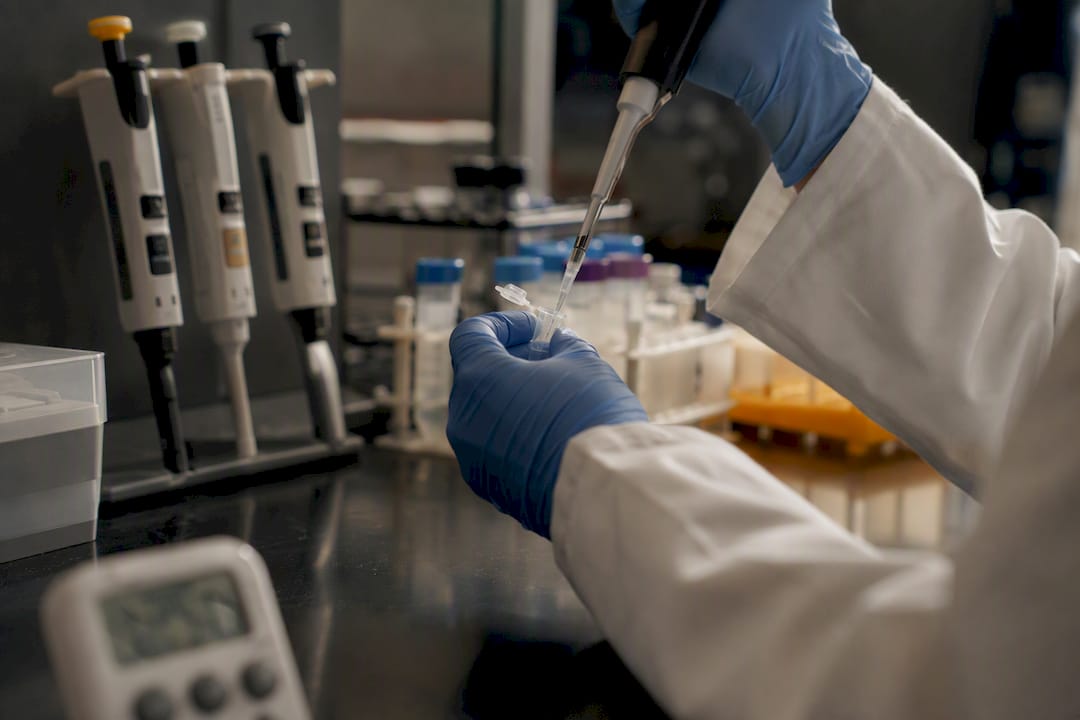
Bioorthogonal click chemistry tackles a different problem: antigen heterogeneity, the fact that a single tumor often contains cells expressing different combinations of surface markers, so no single ADC hits every cell, which is addressed by MayFlower bioscience’s modular assay reagents and platforms. A modular antibody-ADC click strategy lets researchers snap together a targeting antibody and a drug payload inside the body using bioorthogonal chemical reactions, essentially a plug-and-play system that can be reconfigured for different antigen profiles without redesigning the whole molecule. Preclinical models showed improved antitumor activity and better handling of drug resistance compared with standard ADC monotherapy.
A third approach reaches further outside conventional pharmacology entirely: engineered bacteria as delivery vehicles. Researchers modified Salmonella strain VNP20009 as a biohybrid platform to restore two tumor suppressor genes, PTEN and p53, that are frequently disabled in cancer. In preclinical murine melanoma models, the platform achieved substantial tumor inhibition. It’s an early-stage, mouse-only result, but it points toward a future where living organisms, not just synthetic molecules, serve as programmable delivery systems.
What ties these three together: molecular glues, click-chemistry ADCs, and biohybrid platforms are all modular by design, built to be reconfigured rather than rebuilt from scratch for each new target.
Why Does the Tumor Microenvironment Matter So Much for Treatment Success?
A tumor rarely fights alone. Surrounding it are tumor-associated macrophages (TAMs), myeloid-derived suppressor cells (MDSCs), and dense stromal tissue that physically blocks immune cells and drugs from reaching the cancer. These components make up the tumor microenvironment, and they explain why a drug that works beautifully against isolated cancer cells in a petri dish can fail against the same cells inside a living tumor. Reprogramming that environment, not just attacking the tumor itself, is increasingly viewed as essential for responses that actually last.
Several strategies are being tested to reprogram or deplete these suppressive elements:
- Myeloid-targeting CAR-T cells — like the dual-targeting GPNMB approach, engineered to disable the suppressive myeloid cells alongside the tumor itself.
- Cytokine-armed cell therapies — engineered to secrete signaling molecules that recruit additional immune cells into the tumor site.
- Stromal-disrupting agents — designed to break down the physical barrier that keeps immune cells and drugs from penetrating dense tumor tissue.
- Checkpoint combinations — pairing a TME-reprogramming agent with a checkpoint inhibitor to sustain the immune attack once suppression is lifted.
These strategies are also changing how trials are designed and monitored. When a therapy targets the tumor microenvironment rather than the tumor cells alone, researchers often need different endpoints, tracking immune cell infiltration or myeloid cell depletion, not just tumor shrinkage, and different safety monitoring, since disrupting normal immune regulation can trigger inflammatory side effects that a tumor-only drug wouldn’t cause. You can read more about how the tumor microenvironment shapes treatment design in HCRF’s broader explainer on the topic.
How Long Does It Take Preclinical Cancer Breakthroughs to Reach Patients?
Reading about a mouse study that eliminated tumors in 11 days is thrilling. It’s also, statistically, not a preview of what will happen in people. Mouse biology differs from human biology in immune system composition, drug metabolism, and tumor architecture, which is why the overwhelming majority of preclinical cancer breakthroughs never make it to an approved human treatment. Patient-derived xenograft (PDX) models, where human tumor tissue is grown in mice, tend to predict human response somewhat better than fully synthetic mouse tumor models, but neither is a guarantee.
Here’s how a promising discovery typically moves forward, and what to watch for at each stage:
- Preclinical evidence — a mechanism is demonstrated in cell cultures, then in animal models like mice or PDX systems. This is where molecular glues like TCIP3 and biohybrid bacterial platforms currently sit.
- Phase 1 trials — small groups of human patients test safety and dosing. Success here means the drug doesn’t cause unacceptable harm, not that it works.
- Phase 2 trials — larger patient groups test whether the drug shows a genuine efficacy signal, often measured by tumor response rates or progression-free survival.
- Phase 3 trials — large, randomized, often multi-country trials confirm the effect against a standard-of-care comparator. This is the stage INTerpath-001 has reached.
- Regulatory review — even after a positive Phase 3 result, the FDA’s drug review process requires detailed data submission and evaluation before approval, a step that commonly takes months to years.
The clearest signals that an innovation is close to real clinical availability: a confirmatory Phase 3 result with a favorable safety profile, replication of the benefit across more than one trial or patient population, and an active or completed regulatory filing. Absent those three, treat the story as encouraging science, not an imminent treatment option.
How Philanthropic Funding Helps Move Discoveries From the Bench Toward Patients
The gap between a striking mouse result and a Phase 1 trial is rarely a scientific gap. It’s a funding gap. The infrastructure needed to move a discovery forward, manufacturing under Good Manufacturing Practice (GMP) standards, IND-enabling toxicology studies, regulatory-grade assays, is expensive and unglamorous, and it’s exactly the stage where government and industry funding is hardest to secure. That’s the gap philanthropic research funding is built to close.
The Hippocratic Cancer Research Foundation exist to fund that kind of “out of the box” translational work at the Robert H. Lurie Comprehensive Cancer Center of Northwestern University, supporting researchers before their ideas are proven enough to attract large pharmaceutical partnerships. Early philanthropic dollars frequently function as validation capital: a promising early result funded by donor support can be the exact evidence a research team needs to attract a larger institutional grant or an industry collaborator later.
If you’re weighing where a donation makes the most impact, ask a proposal these questions: Does it target a translational bottleneck (manufacturing, biomarker validation) rather than early discovery alone? Is there a clear next milestone the funding unlocks? Who reviews progress, and how often?
HCRF publishes donor guidance on evaluating research funding priorities and a practical guide to giving that drives real impact, both built around this bench-to-bedside lens.
How Are AI and Machine Learning Changing Cancer Research?
Artificial intelligence has become a core research tool rather than a novelty in oncology labs, particularly in the neoantigen selection step described earlier. Predicting which of a tumor’s thousands of mutations will actually trigger a strong immune response used to rely heavily on manual immunology expertise. Machine learning models now screen those mutations computationally, ranking candidates by predicted immune visibility, which is part of what makes personalized vaccines like intismeran manufacturable on a patient-specific timeline instead of taking years per case.
AI tools are also reshaping drug discovery itself, predicting how small molecules will bind to target proteins before a single compound is synthesized in a lab, and helping researchers design molecular glues and modular ADC components computationally rather than through pure trial and error. In diagnostics, machine learning models trained on pathology slide images can flag suspicious tissue patterns that a human eye might take longer to catch, though these tools function as a second check alongside a pathologist’s judgment, not a replacement for one.
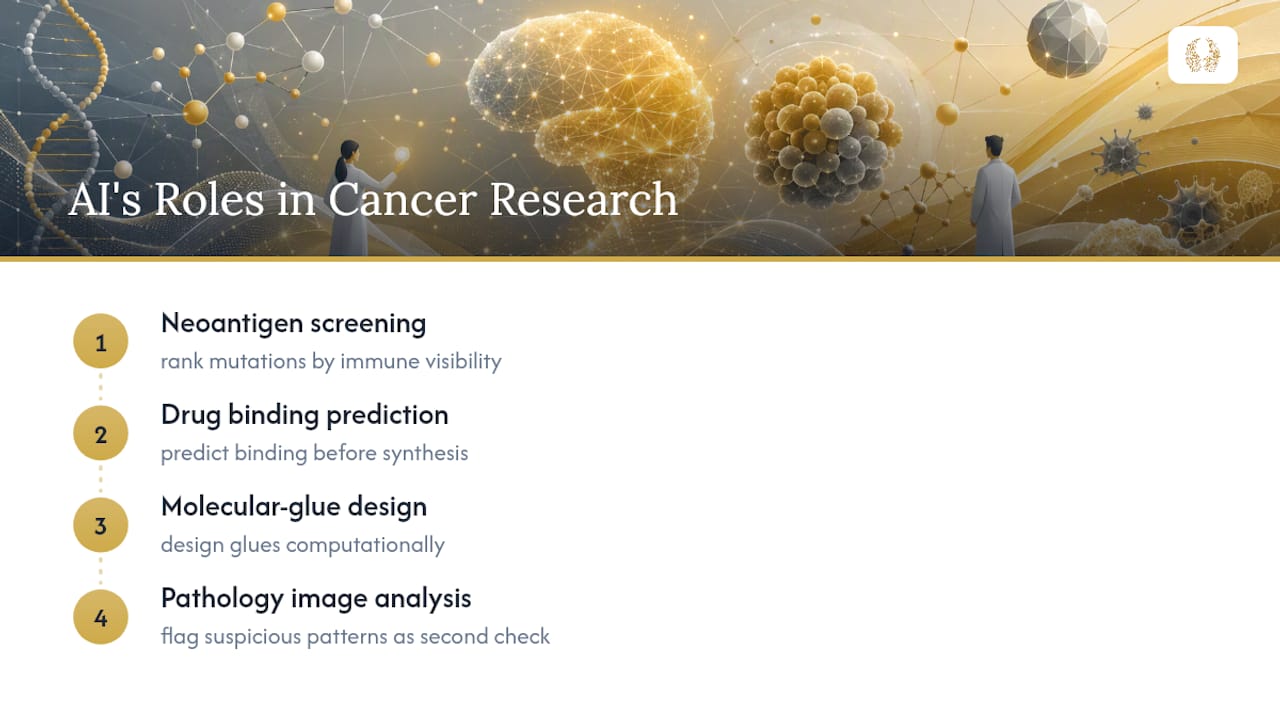
None of this means AI is finding cures on its own. It means the discovery and design pipeline that used to take years of manual work can now run in a fraction of the time, freeing researchers to test more candidates against harder biological problems.
What Is Liquid Biopsy and How Does It Improve Cancer Detection?
A liquid biopsy detects cancer-related DNA fragments, RNA, or whole tumor cells circulating in a patient’s bloodstream, avoiding the need for a surgical tissue sample in many monitoring situations. Traditional tissue biopsies capture a single snapshot of a single tumor location at a single moment. Blood-based testing can be repeated easily over time, which makes it valuable for tracking whether a treatment is working or whether a cancer is recurring, sometimes before it would be visible on imaging.
Circulating tumor DNA (ctDNA) testing has become the most clinically advanced form of liquid biopsy, already used in some settings to guide treatment decisions in colorectal and lung cancers. It’s also central to how researchers are designing next-generation vaccine and immunotherapy trials, since ctDNA levels can serve as an early signal of whether a personalized treatment, like a neoantigen vaccine, is working, long before a recurrence would show up on a scan. That capability directly supports trials like INTerpath-001, where distant metastasis-free survival is a key endpoint researchers want to detect as early as possible.
Liquid biopsy isn’t a replacement for tissue biopsy in every case. Sensitivity varies by cancer type and stage, and a negative blood test doesn’t always rule out disease. But as a monitoring tool layered onto standard care, it’s one of the more immediately practical innovations covered in this article, already moving from research setting into routine clinical use for several cancer types.
How Are CRISPR and Epigenetics Reshaping Cancer Treatment Strategies?
Cancer cells don’t just carry mutated genes, they also silence or activate genes through epigenetic changes, chemical modifications that turn genes on or off without altering the underlying DNA sequence. Epigenetic dysregulation frequently disables tumor suppressor genes or activates genes that drive uncontrolled growth, and drugs targeting these modifications, like DNA methylation inhibitors, are already approved for certain blood cancers.
CRISPR gene-editing technology is expanding what’s possible in two directions. First, it’s being used to directly edit T cells for immunotherapy, removing genes that make CAR-T cells vulnerable to exhaustion or immune rejection, and inserting genes that improve their persistence inside a tumor. Second, researchers are using CRISPR screening as a discovery tool, systematically knocking out genes across thousands of cancer cells to identify which ones a tumor depends on for survival, effectively mapping vulnerabilities that wouldn’t be visible any other way.
The biohybrid bacterial platform described earlier, restoring PTEN and p53 function in melanoma models, sits at the intersection of these fields: it’s a delivery innovation built specifically to counteract the kind of tumor suppressor silencing that epigenetic and genetic research has identified as a core cancer mechanism. Combining gene-editing precision with epigenetic drug targeting is one of the areas most likely to produce genuinely novel cancer therapies over the next several years, though most CRISPR-based cancer applications remain in early clinical or preclinical stages.
How Does Cancer Metabolism Create New Drug Targets?
Cancer cells rewire how they generate energy, a phenomenon researchers call metabolic reprogramming. Rather than relying primarily on oxygen-based metabolism the way healthy cells do, many tumors shift heavily toward a fermentation-based energy pathway even when oxygen is available, a pattern first described decades ago and now understood to give cancer cells building blocks for rapid growth, not just energy.
That rewiring creates genuine drug targets. Researchers are developing compounds that block the enzymes cancer cells depend on for this altered metabolism, starving tumor cells of the specific fuel sources they’ve become reliant on while sparing healthy cells that use more flexible metabolic pathways. Other approaches target amino acid dependencies, some cancers become unusually reliant on specific amino acids like glutamine, creating a vulnerability that a well-designed metabolic inhibitor can exploit.
Metabolic targeting also intersects with immunotherapy in a way that’s easy to overlook. The tumor microenvironment’s metabolic state, how much glucose or oxygen is available, and what byproducts accumulate, directly affects whether immune cells nearby can function properly. A tumor that aggressively consumes local glucose can effectively starve the T cells trying to attack it. That’s part of why some of the combination strategies described earlier in this article, therapies that simultaneously target tumor cells and their surrounding environment, are increasingly designed with metabolic reprogramming in mind, not just direct cell killing.
Does the Microbiome Affect Cancer Risk and Treatment Response?
The bacteria living in a patient’s gut have turned out to play a measurable role in how well certain cancer treatments work, a connection that surprised even researchers who study it closely. Specific bacterial populations appear to influence how effectively checkpoint inhibitors, the class of immunotherapy that includes pembrolizumab, can activate an immune response against tumors. Patients with a more diverse gut microbiome have shown better responses to checkpoint immunotherapy in several research settings, though the exact mechanisms are still being mapped.
This has opened an unusual but active area of translational research: using microbiome modification, through diet, targeted probiotics, or even fecal microbiota transplantation, as a way to improve how patients respond to existing immunotherapies rather than developing an entirely new drug. It’s a strategy that works alongside innovations like CAR-T and checkpoint blockade rather than competing with them.
The microbiome also appears to influence cancer development itself in certain tissue types, particularly colorectal cancer, where specific bacterial strains have been linked to tumor formation and progression. Research connecting engineered bacteria, like the Salmonella-based biohybrid platform described earlier, to microbiome science more broadly is still in its early stages, but it points to bacteria playing a dual role in future oncology: as both a modifiable risk factor and a programmable delivery vehicle.
Where to Read More About Recent Cancer Research Breakthroughs
For readers who want to go straight to the primary sources referenced throughout this article:
- Merck and Moderna’s INTerpath-001 Phase 3 announcement — the full topline trial results for intismeran plus pembrolizumab.
- Stanford Medicine’s report on the TCIP3 molecular glue — details of the preclinical lymphoma study.
- Nature’s GPNMB CAR-T study and its modular ADC click chemistry study — peer-reviewed preclinical data.
- Clinicaltrials and the FDA’s drug review process overview — for trial eligibility and regulatory context.
- The Hippocratic Cancer Research Foundation — institutional background on funded translational research.
Our Take: What This Wave of Innovation Actually Means for Patients and Donors
The honest read on 2026’s cancer research landscape is that one advance is real and immediate, and most of the rest are real but distant. INTerpath-001’s Phase 3 result deserves the attention it’s getting. The molecular glues, biohybrid bacteria, and dual-targeting CAR-T work deserve attention too, just calibrated differently: as evidence that the pipeline behind tomorrow’s treatments is unusually strong, not as treatments arriving next year.
Where conventional coverage falls short is treating every mouse study like a preview of a cure. It isn’t. What matters more is whether a discovery addresses a genuine translational bottleneck, manufacturing, delivery, antigen heterogeneity, the barriers that have killed promising ideas for decades. Judged that way, modular platforms and tumor microenvironment strategies matter more than any single dramatic headline.
If you take one thing from this guide, let it be this: the bridge between a striking lab result and a patient benefit is built with unglamorous, expensive translational work, the exact work philanthropic funding through organizations like HCRF is designed to support. Ready to see how your support moves that work forward? Explore HCRF’s mission and current research priorities and help fund the next translational breakthrough.
— HCRF
This article is general information, not a substitute for advice from a qualified doctor. Consult a qualified healthcare professional about your own circumstances before acting on anything here.
Sources
- Merck
- Stanford Medicine news — lymphoma BCL6 ‘kill switch’ (TCIP3)
- Dual tumour–myeloid targeting of glioblastoma with GPNMB CAR‑T cells | Nature
Recommended
- Hippocratic Cancer Research Foundation: Innovative Therapies | How Many Cures for Cancer Are There?
- Hippocratic Cancer Research Foundation: Innovative Therapies | The Tumor Microenvironment: What Researchers and Clinicians Need to Know
- Hippocratic Cancer Research Foundation: Innovative Therapies | How to Donate to Cancer Research and Drive Real Impact
- Hippocratic Cancer Research Foundation: Innovative Therapies | Cancer Research Funding: A 2026 Donor’s Guide

Three compliance first paths for companies to partner with a cancer nonprofit, plus vetting, contracts, and impact measurement.
Read More →
Explore cutting-edge immunotherapy clinical trials for prostate cancer in 2026. Discover eligibility, benefits, and survival rates today!
Read More →