


4 Types of Malignant Tumors: What You Need to Know
July 23, 2026
4 Types of Malignant Tumors: What You Need to Know

What are the four main types of malignant tumors?
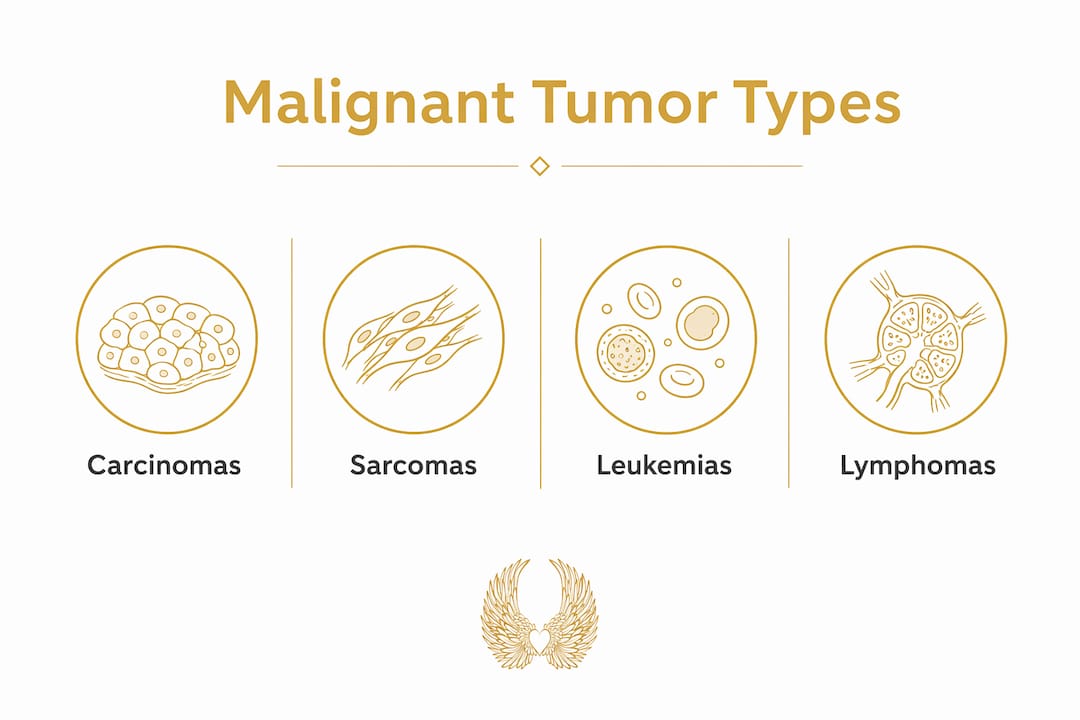
Malignant tumors fall into four primary categories: carcinomas, sarcomas, leukemias, and lymphomas. These are not just labels. Each type tells us where the cancer began, how it behaves, and which treatments give patients the best chance. Understanding this classification is the first step toward understanding cancer itself.
Here is a quick overview of each type:
- Carcinomas originate in epithelial tissues, the cells lining organs and body surfaces. They are by far the most common, accounting for 80–90% of all cancer cases.
- Sarcomas arise from connective and supportive tissues such as bone, muscle, cartilage, and fat. They tend to appear more often in children and young adults.
- Leukemias are cancers of the bone marrow and blood-forming tissues. They do not form solid tumors, earning them the name “liquid cancers.”
- Lymphomas develop in the lymphatic system, the network of nodes and vessels that fights infection. They include Hodgkin lymphoma and Non-Hodgkin lymphoma.
Together, these four types represent the core framework of malignant tumor classification used by oncologists, researchers, and cancer organizations worldwide.
How malignant tumors develop and spread in the body

Every malignant tumor begins with a cell that loses its normal controls. Genetic mutations cause cells to divide without stopping, ignoring the signals that tell healthy cells when to grow and when to rest. Over time, these abnormal cells accumulate and begin to crowd out normal tissue.
What separates malignant tumors from benign ones is their capacity to invade. Malignant cells invade nearby tissues and can break away to travel through the lymphatic system or bloodstream, seeding new tumors in distant organs. That process is called metastasis, and it is what makes cancer life-threatening.
Malignant tumors also trigger a process called angiogenesis, essentially recruiting the body to build new blood vessels that feed the growing tumor. Research published in Frontiers in Immunology confirms that angiogenesis and immune evasion are hallmark behaviors of malignant tumors, contributing to their resistance to treatment.
Key mechanisms driving tumor progression include:
- Uncontrolled cell division driven by genetic mutations
- Loss of apoptosis, the normal process of programmed cell death
- Invasion of surrounding tissues and organs
- Spread through lymphatic vessels and the bloodstream
- Angiogenesis to sustain tumor growth
- Evasion of the immune system’s surveillance
Different tumor types exploit these mechanisms in different ways. Leukemias flood the bloodstream with immature white blood cells. Sarcomas invade muscle and bone. Carcinomas spread along epithelial surfaces before breaking into deeper tissue. Knowing the mechanism helps doctors choose the right weapon.
Detailed characteristics of each of the four main types
Understanding what makes each tumor type distinct is where real clarity begins. Origin, location, and demographics all vary widely across the four categories.
Carcinomas
Carcinomas originate from epithelial tissues and represent the overwhelming majority of cancers diagnosed in the United States. Breast cancer, lung cancer, colon cancer, and prostate cancer are all carcinomas. They are divided into two major subtypes:
- Adenocarcinoma: Develops in glands and organs, such as the breast, colon, and pancreas.
- Squamous cell carcinoma: Arises from flat squamous epithelial cells, commonly found in the skin, lungs, and throat.
Carcinomas tend to affect adults as they age, though certain types like cervical carcinoma can appear earlier. Their high prevalence makes them the central focus of most cancer screening programs.
Sarcomas

Sarcomas arise from mesodermal cells forming connective and supportive tissues, including bone, cartilage, smooth muscle, and fat. Unlike carcinomas, sarcomas are relatively rare and often diagnosed in younger people. A teenager with a painful swelling near the knee may be facing osteosarcoma, one of the most common bone cancers in adolescents.
Key sarcoma subtypes include:
- Osteosarcoma: Bone cancer, most common in the long bones of the arms and legs.
- Leiomyosarcoma: Arises from smooth muscle, often in the uterus or abdomen.
- Chondrosarcoma: Develops in cartilage.
- Rhabdomyosarcoma: Affects skeletal muscle, more common in children.
Leukemias
Leukemias involve overproduction of immature white blood cells in the bone marrow. Because they circulate through the blood rather than forming a solid mass, they behave very differently from carcinomas or sarcomas. Patients often experience fatigue, frequent infections, and easy bruising, symptoms that reflect the blood’s compromised function.
Common leukemia types include:
- Acute Lymphoblastic Leukemia (ALL): Most common in children.
- Acute Myeloid Leukemia (AML): More common in older adults.
- Chronic Lymphocytic Leukemia (CLL): Typically slow-growing, often in adults over 60.
- Chronic Myelogenous Leukemia (CML): Associated with a specific chromosomal abnormality called the Philadelphia chromosome.
Lymphomas
Lymphomas develop in the glands and nodes of the lymphatic system, a network that includes the spleen, tonsils, and thymus. They are classified into two major categories:
- Hodgkin lymphoma: Distinguished by the presence of Reed-Sternberg cells, a specific abnormal cell type visible under a microscope.
- Non-Hodgkin lymphoma: A broader category covering many subtypes, including Burkitt lymphoma and diffuse large B-cell lymphoma.
Lymphomas can also appear outside lymph nodes in organs like the stomach or brain, where they are called extranodal lymphomas.
What are the symptoms and causes of malignant tumors?
Symptoms vary widely depending on where the tumor is located and how far it has spread. Some cancers are silent for years. Others announce themselves early with clear warning signs.
Common general symptoms include:
- Unexplained weight loss
- Persistent fatigue that does not improve with rest
- A lump or thickening under the skin
- Unexplained pain that does not go away
- Changes in bowel or bladder habits
- Unusual bleeding or discharge
- A sore that does not heal
- Persistent cough or difficulty swallowing
Underlying causes and risk factors include:
- Genetic mutations, either inherited or acquired over a lifetime
- Exposure to carcinogens such as tobacco smoke, radiation, or certain chemicals
- Chronic infections, including human papillomavirus (HPV) and hepatitis B or C
- Lifestyle factors such as diet, physical inactivity, and alcohol use
- Age, since most cancers become more common as cells accumulate damage over time
No single cause explains every cancer. Most malignant tumors result from a combination of genetic vulnerability and environmental exposure. For a deeper look at cancer risk factors, the Hippocratic Cancer Research Foundation offers clear, research-backed guidance.
How are malignant tumors diagnosed?
Catching a malignant tumor early can change everything. Diagnosis typically involves several steps, moving from imaging to tissue confirmation.
Key diagnostic methods include:
- Imaging tests: X-rays, CT scans, MRI, and PET scans reveal the size and location of tumors and whether cancer has spread to lymph nodes or other organs.
- Biopsy: A tissue sample is removed and examined under a microscope by a pathologist. This is the definitive step in confirming malignancy.
- Blood tests: For leukemias and lymphomas, a complete blood count (CBC) and bone marrow biopsy can reveal abnormal cell populations.
- Molecular and genetic testing: Tests like next-generation sequencing identify specific mutations driving the cancer, which directly informs targeted therapy choices.
- Pathology review: A pathologist’s report determines the cell type, grade, and origin of the tumor, forming the foundation of the treatment plan.
Pro Tip: If you or someone you love receives an abnormal imaging result, ask specifically for a pathology consultation. The cell type confirmed by biopsy determines which treatments are appropriate, not just the tumor’s location.
Diagnosis is never just about finding a mass. It is about understanding exactly what kind of cancer you are dealing with, because that knowledge drives every decision that follows.
What treatment options exist for malignant tumors?
Treatment depends on the tumor type, its stage, and the patient’s overall health. No two treatment plans are identical, and that is by design.
Core treatment categories include:
- Surgery: Removes the primary tumor and, when possible, nearby lymph nodes. Most effective for localized solid tumors like early-stage carcinomas and sarcomas.
- Chemotherapy: Uses drugs to kill rapidly dividing cells. Applied broadly across all four tumor types, though it is especially central to leukemia and lymphoma treatment.
- Radiation therapy: Targets tumors with high-energy rays to destroy cancer cells. Often combined with surgery for carcinomas.
- Targeted therapy: Drugs designed to block specific molecular drivers of cancer growth, such as HER2 inhibitors for certain breast carcinomas or imatinib for CML.
- Immunotherapy: Activates the patient’s own immune system to recognize and attack cancer cells. Particularly effective for certain lymphomas and some carcinomas.
- Stem cell transplant: Replaces damaged bone marrow with healthy stem cells, a critical option for leukemias and some lymphomas.
Because leukemias are systemic diseases without solid tumors, surgery plays no role in their treatment. Instead, chemotherapy, immunotherapy, and stem cell transplants carry the weight. Sarcomas, by contrast, often require surgery combined with radiation to achieve local control.
Cancer care today is multidisciplinary. Oncologists, surgeons, radiologists, pathologists, and nurses work together to build a plan tailored to each patient. For those navigating chemotherapy, understanding what to avoid during treatment can make a real difference in managing side effects.
How does malignant tumor classification and staging guide treatment?
Classification and staging are the two pillars of cancer management. They answer two different questions: what kind of cancer is this, and how far has it spread?
Staging uses the TNM system, the international standard published by the Union for International Cancer Control (UICC). The TNM classification assesses three factors:
- T (Tumor): The size and extent of the primary tumor.
- N (Node): Whether cancer has spread to regional lymph nodes.
- M (Metastasis): Whether cancer has spread to distant organs.
These three factors combine to assign an overall stage from 0 to IV. Stage 0 indicates carcinoma in situ, meaning abnormal cells are present but have not invaded. Stage IV means the cancer has metastasized to distant organs.
Grading is separate from staging. While staging describes how far cancer has spread, grading describes how abnormal the cells look under a microscope. A high-grade tumor has cells that look very different from normal cells and tends to grow faster. A low-grade tumor’s cells more closely resemble normal tissue and often grows more slowly.
Classification by cell origin matters just as much. Treatments target the original cancer type even when the disease has metastasized. A carcinoma that has spread to the liver is still treated as a carcinoma, not as liver cancer. This principle guides oncologists worldwide and is why accurate pathology is non-negotiable.
The Hippocratic Cancer Research Foundation supports research that advances our understanding of these classification systems, funding work at the Robert H. Lurie Comprehensive Cancer Center of Northwestern University. For a deeper look at how staging shapes clinical decisions, explore the HCRF’s guide on cancer staging.
What do survival rates look like for each tumor type?
Prognosis varies dramatically across the four types, and even within each type depending on stage at diagnosis and available treatments.
Carcinomas carry a wide range of outcomes. Early-stage breast carcinoma has a five-year survival rate above 99% when caught at Stage I, according to the American Cancer Society. Pancreatic carcinoma, often diagnosed late, has a far more sobering outlook. Stage and subtype are everything.
Sarcomas are rare and often diagnosed after they have grown large, partly because they develop in deep tissue where early symptoms are subtle. Osteosarcoma in children and adolescents has seen meaningful improvement in survival over the past several decades, thanks to advances in chemotherapy combined with surgery.
Leukemias show striking variation by subtype. Childhood ALL, once nearly universally fatal, now has a survival rate above 90% with modern treatment protocols. Adult AML remains more difficult to treat, particularly in older patients. The speed of diagnosis and access to specialized care are decisive factors.
Lymphomas are among the most treatable cancers when caught early. Hodgkin lymphoma, particularly in young adults, responds exceptionally well to chemotherapy and radiation, with long-term survival rates that give genuine reason for hope. Non-Hodgkin lymphoma outcomes depend heavily on the specific subtype and stage.
Across all four types, early detection and access to specialized oncology care remain the most powerful predictors of survival.
What risk factors are specific to each tumor type?
Risk factors are not universal. Each of the four main types carries its own distinct vulnerabilities.
Carcinomas are most strongly linked to:
- Tobacco use, the leading cause of lung carcinoma
- Chronic sun exposure, driving squamous cell and basal cell skin carcinomas
- Obesity and high-fat diets, associated with colorectal and breast carcinomas
- HPV infection, the primary driver of cervical carcinoma
- Age, since most carcinomas become more common after 50
Sarcomas are associated with:
- Inherited genetic syndromes such as Li-Fraumeni syndrome and neurofibromatosis
- Prior radiation therapy to a body area
- Certain chemical exposures, including vinyl chloride
- Paget’s disease of bone, which can progress to osteosarcoma
Leukemias are linked to:
- Exposure to high doses of radiation or benzene
- Prior chemotherapy with certain alkylating agents
- Genetic conditions such as Down syndrome, which raises the risk of childhood leukemia
- Smoking, particularly for AML
Lymphomas are associated with:
- Weakened immune function, whether from HIV infection or immunosuppressive medications
- Epstein-Barr virus (EBV) infection, linked to Burkitt lymphoma and Hodgkin lymphoma
- Family history of lymphoma
- Autoimmune diseases such as rheumatoid arthritis and lupus
Understanding your personal risk profile is not about fear. It is about making informed decisions, staying current with screenings, and knowing when to talk to a doctor.
How do malignant tumors differ from benign tumors?
The distinction is fundamental, and it comes down to one word: invasion.
Benign tumors grow in one place. They may become large and cause problems by pressing on nearby structures, but their cells do not invade surrounding tissue and do not spread to other parts of the body. A lipoma, a fibroid, or a benign thyroid nodule are all examples. They are removed when necessary, but they do not metastasize.
Malignant tumors invade nearby structures and spread via the lymphatic and circulatory systems. That capacity for metastasis is what makes them dangerous and what demands more aggressive, often systemic, treatment. A malignant cell that breaks away from the primary tumor can travel to the lungs, liver, brain, or bones and establish a new colony of cancer.
There are also differences at the cellular level. Malignant cells look abnormal under a microscope, with irregular shapes, enlarged nuclei, and rapid division. Benign cells tend to look more like normal tissue. Pathologists use these visual cues, along with molecular markers, to confirm whether a tumor is malignant.
One more distinction worth knowing: some benign tumors can become malignant over time. Colorectal polyps are a classic example. Regular screening catches them before that transformation happens.
An overview of malignant tumors and why this knowledge matters
Malignant tumors are cancers. They grow, invade, and spread in ways that benign tumors do not. The four main types, carcinomas, sarcomas, leukemias, and lymphomas, each arise from different tissues and demand different approaches to diagnosis and treatment.
More than 100 distinct cancer types are recognized in medicine today, but they all trace back to this foundational classification. Knowing whether a cancer is a carcinoma or a sarcoma, a leukemia or a lymphoma, shapes every clinical decision from the first biopsy to the final treatment cycle.
We believe that knowledge is power, and that understanding cancer is the first act of fighting it. The Hippocratic Cancer Research Foundation exists because we know that research saves lives, and that every person who understands these distinctions is better equipped to advocate for themselves and the people they love. Explore our cancer awareness resources to stay informed year-round.
Support the mission. Help us carry hope forward.

At the Hippocratic Cancer Research Foundation (HCRF), we fund the kind of research that dares to think differently. We support “out of the box” cancer science at the Robert H. Lurie Comprehensive Cancer Center of Northwestern University, because we believe the next breakthrough is waiting to be found.
Every dollar you give moves us closer to answers. Every person who understands cancer better becomes part of the solution.
We need you. THEY NEED OUR SUPPORT.
Join our mission today and help us bring the light of hope to every patient who needs it.
With love and gratitude, The HCRF Team
Key Takeaways
The four types of malignant tumors, carcinomas, sarcomas, leukemias, and lymphomas, each arise from distinct tissues and require classification-specific approaches to diagnosis, staging, and treatment.
| Point | Details |
|---|---|
| Four core tumor types | Carcinomas, sarcomas, leukemias, and lymphomas are the four main malignant tumor categories. |
| Carcinomas are most common | Carcinomas account for 80 to 90 percent of all cancer cases, originating in epithelial tissues. |
| Leukemias are liquid cancers | Leukemias do not form solid tumors, making surgery irrelevant and systemic treatment essential. |
| TNM staging guides treatment | The TNM system classifies cancer by tumor size, lymph node involvement, and metastasis, from Stage 0 to Stage IV. |
| Malignancy means invasion | Unlike benign tumors, malignant tumors invade surrounding tissue and can metastasize to distant organs. |
Recommended
- Hippocratic Cancer Research Foundation: Innovative Therapies | How Many Stages of Cancer Are There? A Clear Guide
- Hippocratic Cancer Research Foundation: Innovative Therapies | Signs of Appendix Cancer: What You Need to Know
- Hippocratic Cancer Research Foundation: Innovative Therapies | What Causes Cancer: Key Factors and Prevention
- Hippocratic Cancer Research Foundation: Innovative Therapies | Cancer Awareness Month Calendar: 2026 Complete Guide


An evidence first donor guide showing where gifts fund risky early research, prevention, and patient aid, and how to verify and maximize real world impact.
Read More →