


Charity Auction Bidding for Bidders and Organizers: Start at 30–50%
September 5, 2026
Charity Auction Bidding for Bidders and Organizers: Start at 30–50%

Charity auction bidding is the process of competing for donated items through silent sheets, live paddle calls, or online platforms, where the highest valid bid at closing time takes the item. That single rule drives everything else: whoever places the top bid before the clock runs out wins, and any amount paid above the item’s fair market value may qualify as a tax deduction. Organizers carry the responsibility of documenting that value clearly on every receipt, and this guide walks bidders and event teams through exactly how that plays out in practice.
TL;DR:
- Setting starting bids at 30 to 50% of the fair market value encourages bidding without discouraging participation, while high-demand items may start closer to 60%.
- Increment sizes should correspond to the item’s value, with $5–$10 for under $100 items and around 5–10% of the current bid for higher-value lots, to maintain momentum.
- Using proxy bidding and extended closing rules helps bidders set limits and avoid last-second sniping, optimizing their chances without overpaying.
- Organizers must document the fair market value accurately and provide clear receipts showing the deductible amount based on the bid above that value to ensure tax compliance.
- Items offering unique experiences or collectibles tend to raise the most money, whereas generic retail goods usually underperform unless bundled into themed packages.
Table of Contents
- How Does Charity Auction Bidding Actually Work?
- What Should Starting Bids and Fair Market Value Look Like?
- What Are the Best Bidding Tips and Strategies to Win?
- What Should Organizers Check Before Auction Night?
- Which Items Raise the Most Money at Charity Auctions?
- What Tax Rules Apply to Charity Auction Winners?
- Why Transparent Bidding Practices Matter to HCRF
- How Can You Support HCRF Beyond the Bidding Table?
- Sources
How Does Charity Auction Bidding Actually Work?
Every charity auction runs on the same backbone whether it happens on paper, on a screen, or under an auctioneer’s gavel: someone donates an item, a starting price gets set, and bidders drive that number upward until time or the auctioneer calls it done.
A traditional paper silent auction puts a bid sheet next to each item. Bidders write their name and offer in pen, and whoever’s number sits highest when the sheet closes wins. It works, but illegible handwriting and hand tallying slow everything down. Digital and mobile silent auction platforms fix that by timestamping every bid, enforcing minimum increments automatically, and closing items on a preset schedule, which cuts errors and speeds up checkout considerably.
Live auctions work differently. An auctioneer calls out an item, bidders raise paddles, and the sale happens the moment the gavel drops. There’s no waiting, no revisiting a bid sheet. Online auctions blend both worlds, running on browser or app platforms that never require anyone in the room at all.
Across all three formats, you’ll encounter the same core mechanics:
- Starting bid: the floor price set by the organizer, usually well below full value
- Reserve: a hidden minimum the item must hit before it sells
- Bid increments: the fixed jump required between offers
- Proxy or auto-bids: a system that bids on your behalf up to a limit you set
- Buy-It-Now: a fixed price that lets one bidder claim the item instantly
What Should Starting Bids and Fair Market Value Look Like?
Fair market value, or FMV, is what an item would reasonably sell for on the open market. Organizers need to nail this number down before the event even opens, because it affects both how much an item raises and what portion of a winning bid counts as a charitable gift under IRS guidance on charity auctions.
Common practice sets starting bids at roughly 30 to 50% of FMV, which gives bidders room to compete without scaring anyone off with a price that already looks close to retail. A rare or high-demand item, like a private chef dinner or a sports memorabilia piece, can start higher, closer to 50 to 60% of FMV, since scarcity already does some of the selling.
Bid increment guidance that keeps momentum:
- Items under $100 in FMV: increments of $5 to $10
- Items in the $100 to $500 range: increments of $25 to $50
- Higher-value items: increments around 5 to 10% of the current bid, rounded to a clean number for simplicity
Pro Tip: If you’re organizing, round every increment to a number that’s easy to say out loud during a live call, like $25 instead of $23. Bidders move faster when the math is simple.
Increments that are too small drag the auction out and kill energy; increments set too large scare off bidders who might have gone one more round. Buy-It-Now pricing works well for consignment items or anything with a clear retail comparison, but setting it too close to the starting bid can end competitive bidding before it even builds momentum.
What Are the Best Bidding Tips and Strategies to Win?
Winning a charity auction bid comes down to knowing the platform’s features and having a plan before the bidding opens, not reacting in the moment.
Proxy or auto-bidding lets you set a maximum amount upfront. The system then raises your bid automatically in minimum increments whenever someone outbids you, stopping the moment your ceiling is hit. It’s the closest thing to setting a budget and walking away, though you still need to check back near closing time.
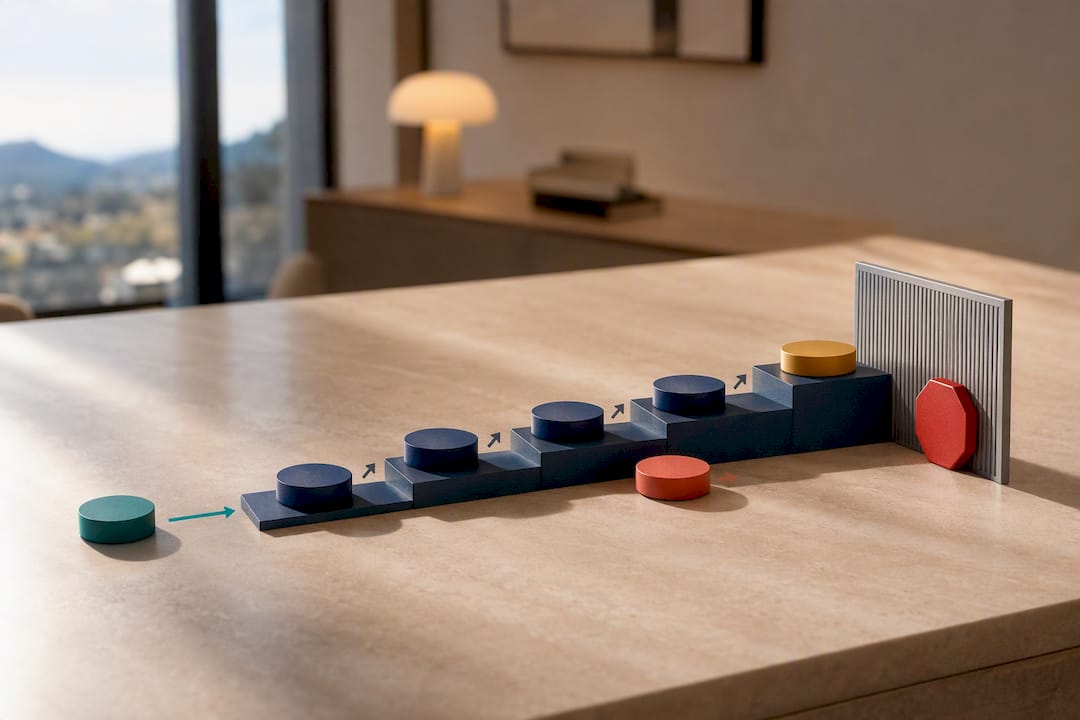
Many online and hybrid events use an extended close, often called the 15-minute rule: if a bid lands in the final minutes, the closing time pushes back to give other bidders a chance to respond. This keeps one person from sniping an item in the last ten seconds, and it changes strategy considerably. Waiting until the last second rarely works anymore.
Four moves that consistently help bidders win without overpaying:
- Set your real maximum before the event starts, and write it down somewhere you’ll actually check.
- Watch the increment size, not just the current bid, since a jump from $50 to $75 feels different than $50 to $55.
- Use Buy-It-Now only when the price genuinely reflects what you’d pay retail.
- Confirm your payment method is on file before bidding closes, since most platforms charge automatically the moment an auction ends.
Once you win, expect a notification by email or text, an automatic charge or invoice, and instructions for pickup or shipping. Keep every receipt. You’ll want it come tax season.
What Should Organizers Check Before Auction Night?
Running a clean auction depends less on luck and more on a short list of decisions made weeks in advance.
Start with the platform. Whatever system you choose needs auto-close scheduling, proxy bidding, integrated payment processing, and reporting that exports cleanly for reconciliation. Manual tallying on paper still works for small events, but digital platforms cut errors and speed checkout once you’re running more than a few dozen items.
Catalog setup matters just as much as the platform itself:
- Every item needs a clear photo, an honest description, and a documented FMV
- Starting bids and increments should be set consistently across similar item categories
- Flag any Buy-It-Now items clearly so bidders know that option exists
- Test the payment system before doors open, not during checkout
Assign specific staff to checkout roles ahead of time, and print or prepare digital receipts that show FMV separately from the amount paid. That single detail saves a flood of donor questions in April. After the event closes, reconcile totals against your catalog, follow up with winners on pickup or shipping, and send thank-you communications that double as tax documentation. Guidance on noncash charitable contributions can help organizers handle unusual donated items correctly.
Which Items Raise the Most Money at Charity Auctions?
Experiences beat objects almost every time. Items like private dinners, exclusive travel packages, and one-of-a-kind collectibles consistently pull the highest bids because they can’t be bought off a shelf, and that scarcity drives emotional investment.
Solid, reliable performers include gift certificates from local businesses, themed gift baskets, and VIP access packages tied to a sports team or venue. These items rarely headline an auction, but they sell steadily and keep bidding activity moving throughout the night.
- Top tier: exclusive experiences, travel getaways, rare collectibles, VIP access
- Steady sellers: local business gift cards, themed baskets, signed memorabilia
- Avoid or bundle: generic retail goods with no story, since these tend to underperform unless grouped into a larger themed basket
What Tax Rules Apply to Charity Auction Winners?
The IRS treats charity auction purchases in a specific way: the deductible portion is the amount a winner pays above the item’s fair market value, not the full purchase price. If an item’s FMV is $200 and someone wins it for $350, only $150 counts as a potential charitable deduction, and that depends entirely on the organizer documenting FMV accurately on the receipt.
A compliant receipt needs to show:
- The organization’s legal name and EIN
- A description of the item purchased
- The item’s documented fair market value
- The total amount the winner paid
- A clear statement of the deductible portion, if any
Sales tax rules on auction items vary by state, so organizers should check local requirements rather than assume a blanket exemption applies. Bidders should keep every auction receipt with their tax records for the year, the same way they’d keep any other charitable donation documentation. HCRF’s guide to charitable donation receipts breaks down what a compliant template actually looks like.
Why Transparent Bidding Practices Matter to HCRF
We believe every dollar bid in support of cancer research deserves an honest accounting. When fundraising events are hosted, fair market value is disclosed clearly and receipts separate the deductible portion from the purchase price, because donors deserve to know exactly where their generosity lands. Trust isn’t a courtesy here. It’s the foundation of every gala, every campaign, and every gift that funds research at the Robert H. Lurie Comprehensive Cancer Center. If you’re weighing whether a nonprofit deserves your bid, our guide on how to evaluate a charity before you give walks through the questions worth asking.
— HCRF
How Can You Support HCRF Beyond the Bidding Table?
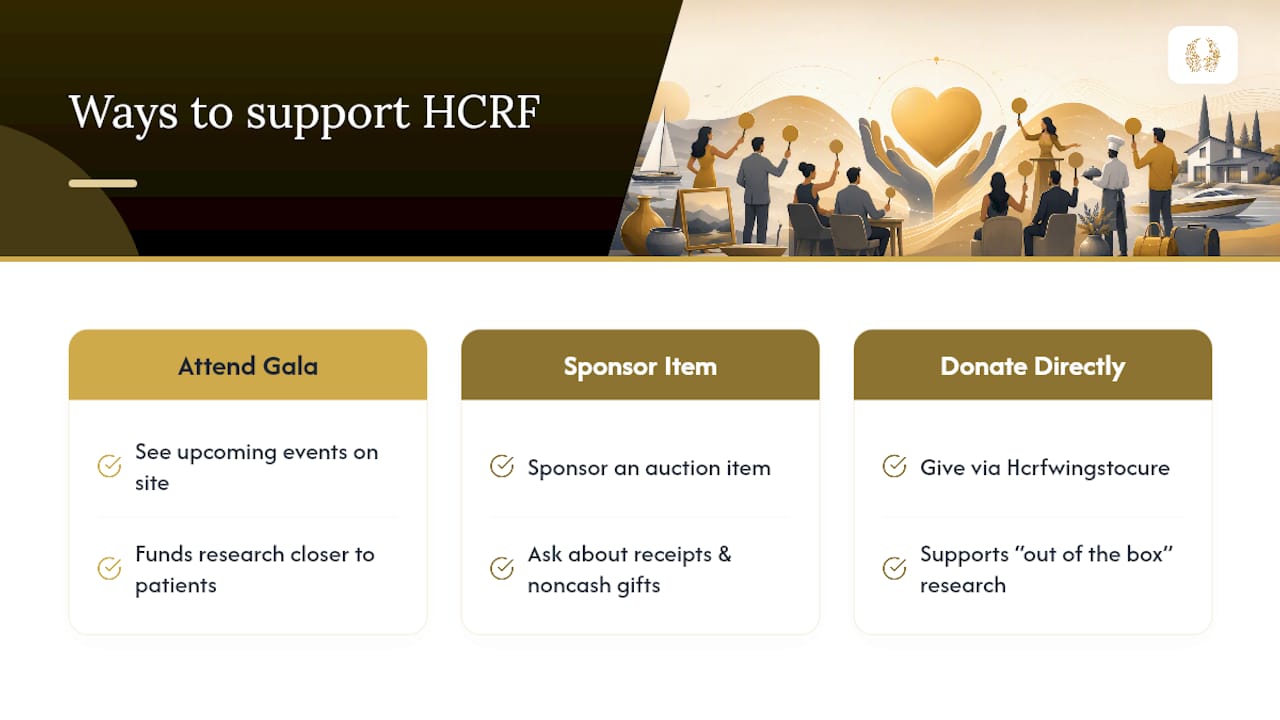
Bidding is one way to fuel cancer research, but it’s far from the only one. Attending a gala, sponsoring an item, or making a direct donation all carry the same light forward: funding research that refuses to accept “no cure yet” as a final answer.

Every gift supports “out of the box” cancer research, helping to bring advances closer to patients who are waiting right now. If your organization is exploring ways to give internationally or through cultural giving channels, resources like this guide to charity campaign contributions offer a useful outside perspective on inclusive fundraising.
We need you. Visit Hcrfwingstocure to see upcoming events, make a donation, or reach out directly if you’re an organizer who wants guidance on donor receipts and noncash contributions. With love and gratitude for every bidder, every donor, and every hand that helps carry hope home.
This article is general information, not a substitute for advice from a qualified financial advisor. Consult a qualified financial professional about your own circumstances before acting on anything here.
Sources
- Charity auctions | Internal Revenue Service
- How Do Silent Auctions Work? A Simple Guide | 32auctions
Recommended

Discover what causes cancer and how to prevent it. Learn about genetic mutations, risk factors, and actionable choices to protect your health.
Read More →
Understand IRS rules for charitable donation receipts. Ensure compliance and maximize your deductions with our comprehensive guide and templates.
Read More →