


Young Investigator Award: Your 2026 Application Guide
July 27, 2026
Young Investigator Award: Your 2026 Application Guide

What is a young investigator award and who qualifies?
A Young Investigator Award is a competitive funding and recognition program built for one purpose: to carry promising early-career scientists across the most precarious gap in academic medicine, the transition from fellowship or doctoral training into independent research. These awards are not participation trophies. They are deliberate investments in the investigators most likely to reshape how we understand and treat disease.
If you are finishing a fellowship, holding a junior faculty appointment, or actively building your first independent research program, this is the moment these awards were designed for. Here is what eligibility typically looks like across U.S.-based programs:
- Terminal degree: MD, PhD, MD/PhD, or equivalent is required by virtually every program
- Career stage: Most programs require applicants to be within 5–10 years of their terminal degree or fellowship completion
- Institutional affiliation: A faculty appointment or equivalent position at an accredited U.S. research institution is standard
- Protected research time: Many programs, including the Conquer Cancer Young Investigator Award, require at least 60% of your time dedicated to research
- Mentorship: A committed, named mentor with a formal letter of support is non-negotiable for most programs
- Society membership: Programs like ASCO’s YIA require active membership in the sponsoring organization
The underlying philosophy is consistent across programs: financial support and mentorship together, not one without the other.
Table of Contents
- Major early career award programs you should know about
- Eligibility criteria that determine whether you can apply
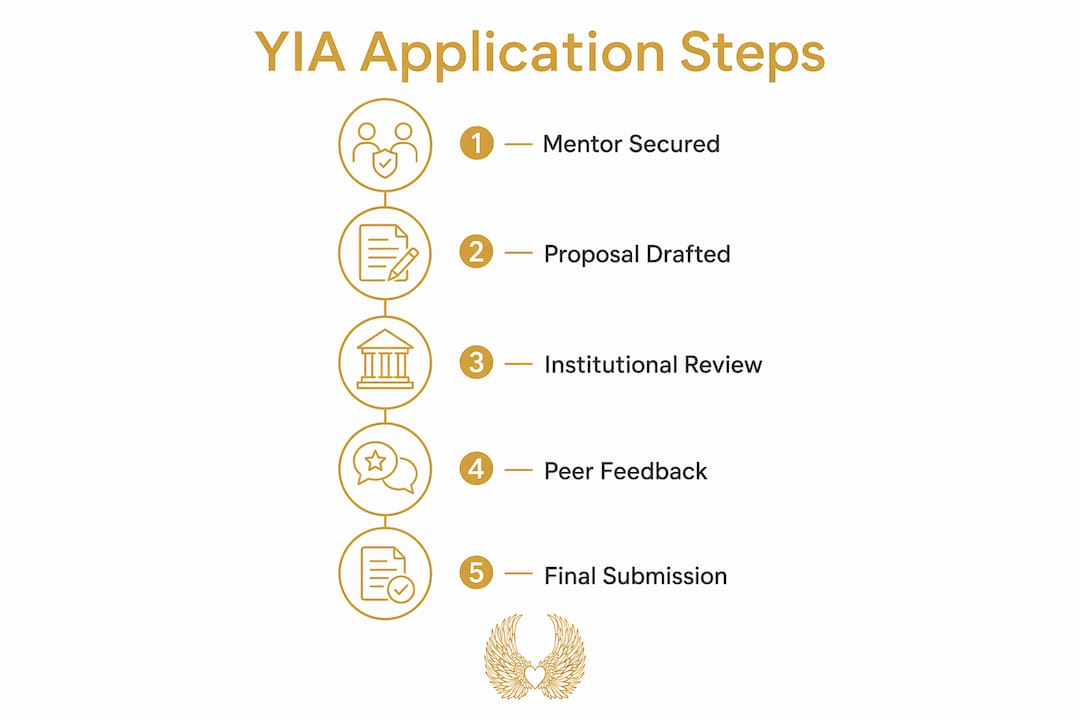
- How to navigate the application process from start to finish
- What funding and recognition actually look like
- How to build an application that review committees remember
- What past awardees’ projects reveal about what gets funded
- Common challenges applicants face and how to move past them
- Post-award obligations you need to plan for
- How a YIA opens doors to career growth and community
- Key Takeaways
Major early career award programs you should know about
The U.S. biomedical research ecosystem hosts a remarkable range of early career awards, each with its own focus and community. Knowing which programs align with your science is the first real step.

Conquer Cancer Young Investigator Award (ASCO)
Administered through ASCO’s Conquer Cancer Foundation, this is one of the most recognized junior investigator grants in oncology. It supports physicians within 10 years of their medical degree who are transitioning from fellowship to faculty, with a focus on clinically relevant cancer research. Special topical competitions exist for specific areas, including ALK-related cancers, breast cancer, and pediatric oncology, giving applicants the option to compete in a focused pool aligned with their science.
Academic Pediatric Association Young Investigator Awards Program
The APA’s program targets physician-scientists in pediatric research, emphasizing mentored, clinically grounded projects. It reflects the Society for Pediatric Research’s commitment to building the next generation of pediatric investigators through structured career development.
Society of Surgical Oncology Young Investigator Award
The SSO’s award recognizes outstanding research contributions from early-career surgical oncologists. It carries both financial support and formal recognition at the SSO Annual Cancer Symposium, a meaningful platform for visibility within the surgical oncology community.
American College of Cardiology Young Investigator Awards
The ACC hosts competitive YIA sessions at its annual scientific sessions, where finalists present original research. Recognition here carries significant weight in cardiovascular medicine.
NSF CAREER Award and Early-Career Programs
For investigators in basic science and engineering, the NSF CAREER program provides a minimum of $400,000 over five years to assistant professors with demonstrated potential for research and education leadership. NSF also offers the BRC-BIO program (up to $450,000 plus $50,000 for equipment over 36 months) for pre-tenure faculty at non-R1 institutions, and the ERI program (up to $200,000 over 24 months) for new engineering investigators.
CMT Research Foundation Emerging Researcher Award
Focused on Charcot-Marie-Tooth disease research, this emerging researcher grant exemplifies how disease-specific foundations create targeted pathways for early-career scientists whose work might not fit the larger program molds.
Hippocratic Cancer Research Foundation
The HCRF is a 501©(3) nonprofit supporting bold, unconventional cancer research at the Robert H. Lurie Comprehensive Cancer Center of Northwestern University. Its mission is to fund the kind of “out of the box” science that larger, more risk-averse funding bodies often pass over. For early-career cancer researchers whose ideas push boundaries, the HCRF represents exactly the kind of institutional ally that can make a difference.
Eligibility criteria that determine whether you can apply
Understanding the fine print before you invest weeks in an application matters. Eligibility rules vary by program, but these are the criteria that appear most consistently across U.S.-based programs:
- Degree requirement: MD, PhD, DO, or equivalent terminal degree from an accredited institution
- Career window: Typically within 5–10 years of degree completion or fellowship; the Conquer Cancer YIA specifies within 10 years of the medical degree
- Faculty appointment: Most programs require a current or imminent junior faculty position (instructor, assistant professor, or equivalent)
- Protected research time: A commitment of at least 60% protected research time is a standard requirement for mentored awards
- Mentorship arrangement: A named, senior mentor with documented institutional support is required; the mentor’s letter carries real evaluative weight
- Society membership: ASCO YIA applicants must hold active ASCO membership; other programs have analogous requirements
- Institutional endorsement: A letter from a department chair or research dean confirming protected time and institutional commitment is typically mandatory
- Exceptions and extensions: Some programs allow extensions to the career window for documented circumstances such as parental leave, serious illness, or foreign medical graduate licensure timelines
One nuance worth knowing: the JMP Young Researcher Award in mathematical physics requires candidates to be within a defined post-PhD window, with extensions available under documented circumstances, a model many biomedical programs mirror. If your career path included interruptions, check each program’s extension policy before assuming you are ineligible.
How to navigate the application process from start to finish
Most YIA applications share a common architecture. The differences lie in the details, and those details determine whether your submission rises to the top.
Core application components:
- Research proposal (usually 3–6 pages): specific aims, background, innovation, approach
- Mentor letter of support: must address project feasibility, your independence, and institutional commitment
- Institutional letter: from department chair or dean confirming protected research time
- Budget and budget justification: personnel, supplies, travel, indirect costs
- Biosketch or CV: formatted per NIH or program-specific standards (see NIH biosketch guidelines)
- Society membership verification
- Human subjects or IRB documentation where applicable
Application timeline table:
| Milestone | Recommended Timing |
|---|---|
| Secure mentor commitment | 10 months before deadline |
| Draft specific aims | 6 months before deadline |
| Gather institutional letters | 6 months before deadline |
| Internal peer review of proposal | 3 months before deadline |
| Finalize and submit | By deadline (e.g., September 11, 2026 for ASCO YIA) |

The ASCO YIA application opens July 1, 2026, with a deadline of September 11, 2026. All submissions go through an online portal; no email or fax submissions are accepted. The review is conducted by an independent Grants Selection Committee using peer-review standards.
Application checklist:
- [ ] Confirm eligibility (degree, career stage, protected time)
- [ ] Secure mentor and obtain commitment letter
- [ ] Obtain institutional endorsement letter
- [ ] Draft and revise research proposal with peer feedback
- [ ] Complete budget justification
- [ ] Verify active society membership
- [ ] Submit through the designated online portal before the deadline
Start earlier than you think you need to. Institutional approval processes alone can take four to six weeks.
What funding and recognition actually look like
The financial picture for most YIAs typically involves a funding amount between $25,000 and $50,000 for a one-year period, supporting research personnel, project-related expenses, and conference travel. Some programs allow concurrent funding from other sources, provided there is no scientific or budgetary overlap.
Beyond the dollar amount, the benefits compound in ways that matter more over time:
- Mentorship and career guidance: Structured mentorship through a YIA often opens doors that money alone cannot. Mentored YIAs provide career development and peer networks that frequently exceed the monetary value of the grant itself.
- Conference access and visibility: Many awards include travel support to the sponsoring society’s annual meeting, where awardees present their work and build relationships with senior investigators and potential collaborators.
- Formal recognition: Award ceremonies, named lectureships, and publication in society journals amplify your professional profile at a career stage when visibility matters most.
- Gateway to larger funding: A YIA on your CV signals to NIH study sections that your work has already passed rigorous peer review. Many investigators credit their YIA as the credential that made their first R01 application competitive.
- Peer community: Cohorts of YIA recipients often maintain relationships for decades. The network you build during your award year can shape your entire career trajectory.
Recipients must maintain active society membership and comply with post-award reporting requirements to sustain these benefits throughout the award period.
How to build an application that review committees remember
Review committees read dozens of proposals. The ones that stay with them share a few qualities that have nothing to do with the applicant’s pedigree.
Lead with the scientific gap, not your biography. The specific aims page should open by naming the unmet need your research addresses, not by summarizing your training history. Committees want to know why this question matters now.
Articulate your independence clearly. One of the most common weaknesses in YIA applications is ambiguity about where the mentor’s work ends and the applicant’s begins. Be explicit. Show that your project is yours, supported by your mentor, not derived from their existing program.
Choose a focused, high-stakes question. Review committees favor applications with focused, impactful projects that address unmet scientific needs. A proposal that tries to answer three questions usually answers none of them convincingly.
Make the mentor letter work harder. A strong mentor letter does not just praise the applicant. It validates the project’s feasibility, confirms institutional resources, and describes a concrete mentorship plan with milestones. If your mentor’s letter is generic, ask for a revision.
Seek peer review before submission. Ask a colleague who has won a YIA to read your proposal. Their feedback will surface assumptions you have stopped seeing because you are too close to the work.
Pro Tip: Identify the specific topical competition within a program (e.g., ASCO’s ALK-positive cancer or breast cancer tracks) and tailor your proposal language to that focus area. A proposal written for a general pool that happens to fit a special competition is almost always weaker than one written specifically for it.
What past awardees’ projects reveal about what gets funded
Looking at the track record of funded projects tells you more about selection priorities than any program description will. Across ASCO’s Conquer Cancer YIA cohorts, funded projects have consistently addressed translational questions: moving a biological insight from bench to a clinically testable hypothesis, or designing a correlative study embedded in an existing trial. Projects that bridge molecular mechanism and patient outcome tend to perform well.
The Eurographics Young Researcher Award, while outside biomedical science, offers a useful parallel. Its past awardees from 2004 through 2026 share a common profile: early, significant contributions to a defined subfield, with work that opened new directions rather than refined existing ones. The pattern holds across disciplines. Committees reward investigators who are building something, not just extending it.
In pediatric research, APA-funded projects have frequently centered on health equity, rare disease mechanisms, and implementation science, reflecting the field’s recognition that clinical impact requires both discovery and delivery. If your science sits at that intersection, say so explicitly in your proposal.
The lesson from funded projects is not to mimic them. It is to understand the committee’s implicit theory of change: what kind of early-career work, if supported now, will matter most in ten years?
Common challenges applicants face and how to move past them
The application process surfaces predictable obstacles. Knowing them in advance means you can plan around them rather than scramble when they appear.
Institutional bottlenecks. Department chairs, grants offices, and compliance teams all need to sign off before you submit. Their timelines are not yours. Build in at least six weeks for institutional approvals, and send reminder emails two weeks before you need signatures.
The mentor mismatch. Some applicants choose a mentor based on prestige rather than fit. A mentor who is too busy, too distant from your science, or unwilling to engage with the application process will produce a weak support letter. Choose someone who is genuinely invested in your success and has time to show it.
Scope creep in the proposal. The word limits on YIA proposals are tight. Applicants routinely try to include too much, which dilutes the central argument. Cut every aim that is not essential to the core question. A proposal with one strong aim beats one with three weak ones.
Eligibility edge cases. If you are approaching the career window limit, have taken leave, or trained internationally, contact the program officer before investing in a full application. Most programs have formal policies for extensions; program officers can tell you whether your situation qualifies.
Resubmission discouragement. Most funded investigators did not win on their first attempt. If your application is not selected, request reviewer comments, address them systematically, and resubmit. The reviewers who read your revised proposal will notice the improvement.
Post-award obligations you need to plan for
Winning a YIA is the beginning of a commitment, not the end of a process. Programs take their post-award requirements seriously, and failure to comply can affect your eligibility for future funding.
Most programs require:
- Annual or final progress reports: Describing research milestones, publications, presentations, and any changes to the research plan
- Financial reporting: Accounting for how award funds were spent, with documentation for personnel, supplies, and travel
- Continued society membership: Active membership in the sponsoring organization throughout the award period
- Protected research time maintenance: Sustaining the committed percentage of research time; notifying the program if your protected time drops below the threshold
- Publication acknowledgment: Citing the award in any publications arising from funded work
- Presentation obligations: Some programs require awardees to present at the annual meeting during or after the award year
The ASCO YIA program requires recipients to maintain at least 60% protected research time and active ASCO membership throughout the award period. Treat these obligations as part of the award’s value, not as administrative friction. The relationships you build through continued engagement with the sponsoring society often matter as much as the grant itself.
How a YIA opens doors to career growth and community
The career development dimension of a young investigator award is real and lasting. It operates on several levels simultaneously.
At the most immediate level, the award gives you something concrete to point to when you walk into a department chair’s office and ask for protected time, lab space, or startup funds. It signals that an independent review committee has already evaluated your science and found it worth investing in.
At the network level, YIA cohorts create bonds that persist. Investigators who received their awards in the same year often collaborate, co-author, and advocate for each other across decades. The annual meeting presentations that come with many awards place you in front of senior investigators who are actively looking for collaborators and future faculty candidates.
At the funding level, a YIA is frequently the credential that makes an NIH R01 application competitive for the first time. Study sections respond to evidence of peer-reviewed recognition, and a named award from ASCO, the APA, or a comparable society carries that signal clearly.
The HCRF’s support for innovative cancer research at Northwestern’s Lurie Cancer Center reflects this same understanding: that early investment in the right investigators, paired with mentorship and community, produces the breakthroughs that change outcomes for patients. That is the promise every YIA makes. And for the investigators who win them, it is a promise that tends to be kept.
Key Takeaways
Young Investigator Awards are most competitive when applicants combine a focused, high-impact research proposal with strong mentorship, institutional support, and early preparation starting at least six months before the deadline.
| Point | Details |
|---|---|
| Eligibility window | Most programs require applicants to be within 10 years of their terminal degree, with 60% protected research time. |
| Funding range | Typical awards provide between $25,000 and $50,000 for a one-year period, covering personnel, research costs, and travel. |
| Application timing | The ASCO YIA opens July 1, 2026, with a September 11, 2026 deadline; start preparation 6–9 months early. |
| Mentorship weight | Mentor letters validate project feasibility and institutional commitment, making them central to selection decisions. |
| Career impact | A YIA strengthens NIH R01 competitiveness and builds peer networks that shape an investigator’s career for decades. |
Recommended
- Hippocratic Cancer Research Foundation: Innovative Therapies | Cancer Research Funding: A 2026 Donor’s Guide
- Hippocratic Cancer Research Foundation: Innovative Therapies | Supplements to Avoid During Immunotherapy: A Patient Guide
- Hippocratic Cancer Research Foundation: Innovative Therapies | Cancer Awareness Month Calendar: 2026 Complete Guide
- Hippocratic Cancer Research Foundation: Innovative Therapies | Teas to Avoid During Chemo: A 2026 Patient Guide


Learn about the most deadly childhood cancer, brain and CNS tumors. Understand risks, symptoms, and treatment to protect your child.
Read More →