

Donors: What Biobank Tissue Donation Does with Your Tissue and Rights
August 31, 2026
Donors: What Biobank Tissue Donation Does with Your Tissue and Rights
Yes, you can donate tissue to a research biobank, and it happens in more ways than most people realize: leftover surgical tissue, a research biopsy, a scheduled donation event, or post-mortem retrieval. Every pathway runs through IRB-approved consent, your gift is never bought or sold, and once annotated with your clinical history, that tissue becomes fuel for biomarker discovery, targeted therapies, and better-designed clinical trials.
TL;DR:
- Most tissue donations come from leftover surgical material, healthy volunteers, or post-mortem consent, with minimal risks and broad eligibility.
- Proper annotation linking tissue to clinical history enhances research value, especially for studying treatment resistance and biomarker validation.
- Donation procedures depend on tissue type and timing, with rapid freezing or fixation crucial to preserve sample integrity for future studies.
- Broad consent and de-identification protect donor privacy, but withdrawal is limited once samples are de-identified or distributed to researchers.
- Researchers must request approval through governance committees, and sample access involves a feasibility review, cost, and ethical evaluation.
Table of Contents
- What a Biobank Actually Is (and Why Your Tissue Matters)
- Who Can Donate, What Disqualifies You, and the Real Risks
- How Donation Actually Works, Step by Step
- Consent, Privacy, and Who Actually Controls Your Sample
- What Happens to Your Sample After You Walk Out the Door
- How to Find a Biobank and Register to Donate
- How Donated Tissue Turns Into Real Discoveries
- HCRF’s Perspective: What Stewardship Should Actually Look Like
- Where to Learn More or Start the Process
- Sources
What a Biobank Actually Is (and Why Your Tissue Matters)
A biobank is an organized repository that stores biospecimens alongside the clinical and demographic data tied to them. A tube of blood or a sliver of tumor sitting in a freezer, by itself, tells researchers almost nothing. Attach it to a patient’s diagnosis, treatment history, and follow-up outcomes, and it becomes a tool that can answer questions no single study could tackle alone.
That linkage, called annotation, is what separates a scientifically useful sample from a biological curiosity. A review of biobanking fundamentals makes clear that annotation, longitudinal follow-up, and genetic profiling multiply a specimen’s research value far beyond the raw tissue itself. Researchers studying why a particular breast cancer subtype resists chemotherapy need to know the patient’s treatment timeline, not just the tumor’s cell structure.
Donated, well-annotated tissue supports several distinct lines of research:
- Precision oncology, matching patients to therapies based on their tumor’s genetic signature.
- Biomarker validation, confirming that a lab finding actually predicts real patient outcomes.
- Translational studies, moving discoveries from the lab bench toward clinical trials.
- Trial matching, helping researchers identify candidates whose tissue profile fits an experimental treatment.
Cancer biobanks in particular have become networked resources, letting institutions pool samples so researchers can study rare cancers that no single hospital sees often enough to study alone. Serious biobanks also follow governance standards like ISO 20387, the international benchmark for biobanking quality, along with detailed standard operating procedures that govern everything from how quickly a sample gets frozen to how it’s labeled and tracked. Those standards aren’t bureaucratic overhead. They’re what keeps your donated tissue scientifically trustworthy years after you gave it.
Who Can Donate, What Disqualifies You, and the Real Risks
Most people who wonder whether they qualify to donate are surprised by how broad the door actually is. Three donor groups make up the bulk of biobank contributions: surgical patients whose leftover tissue would otherwise be discarded after a biopsy or operation, healthy volunteers who give blood or normal tissue specifically for research, and individuals who consent in advance to post-mortem tissue retrieval, common in brain and neurological research.
Disqualification is less common than people expect, but it does happen for a few clear reasons.
- Inability to provide informed consent. If a patient can’t understand or agree to the terms, tissue generally isn’t collected for research purposes without a legal representative’s consent.
- Infectious disease exclusions. Certain biobanks screen out samples with specific transmissible conditions, particularly for tissue types distributed for lab culture work.
- Procedures that add clinical risk purely for research. Extra biopsies performed solely to generate a research sample are rare, and when they do happen, they require separate, explicit consent and a distinct risk conversation with your care team.
Beyond those exceptions, the risks of donating are genuinely minimal. If your tissue is leftover from a surgery you were already having, donation adds nothing to your physical experience. Even standalone blood draws for research carry only the ordinary discomfort of a routine blood test.
Your rights as a donor are worth understanding before you sign anything. Participation is voluntary, and declining never affects the clinical care you receive. You can generally withdraw consent later, though there’s a practical limit: once a sample has been de-identified or already distributed to a researcher for an active study, pulling it back becomes difficult or impossible. Ask about this limit directly. A trustworthy biobank will explain it plainly rather than bury it in fine print.
How Donation Actually Works, Step by Step
Donated tissue takes several physical forms, and the type collected depends on how the sample will be used. Common categories include FFPE tissue (formalin-fixed, paraffin-embedded, the standard for long-term pathology storage), fresh-frozen tissue for genomic work, blood components like plasma and serum, extracted DNA, and increasingly, digital pathology images that let researchers study tissue architecture without physically handling the sample.
Who actually collects your donation depends on the pathway. Pathology teams handle surgical leftover tissue as part of routine specimen processing. Surgical teams coordinate directly when a research biopsy is planned in advance. Research coordinators manage most blood and normal-tissue donations. For post-mortem donation, dedicated retrieval teams, often working through national networks, coordinate timing with a family and a funeral home.
Picture two common scenarios:
- Surgical donation: Before your operation, a research coordinator reviews the consent form with you, answers questions, and documents your agreement. During surgery, the surgical team removes only what’s clinically necessary; any tissue beyond diagnostic needs goes to the biobank rather than the incinerator. Pathology reviews it, and the biobank team logs, processes, and stores it, usually within hours.
- Event-based donation: Programs modeled on the Komen Tissue Bank invite healthy volunteers to a scheduled collection event, where trained staff take a small core-needle sample of normal breast tissue along with blood, all in an outpatient setting designed specifically for research donors rather than patients.
Timing matters enormously here. The gap between tissue leaving the body and reaching a freezer, called time-to-freeze, directly affects sample quality; SOPs typically require action within minutes to a few hours to preserve the molecular integrity researchers depend on.
Pro Tip: If you’re donating leftover surgical tissue, ask your surgical coordinator in advance whether the biobank needs your consent signed before the operation date. Some programs require it days ahead, not the morning of surgery.
Consent, Privacy, and Who Actually Controls Your Sample
The consent model used by most biobanks today is called broad consent, and understanding it will save you a lot of confusion. Rather than asking you to approve one specific study, broad consent permits your tissue to be used across a range of future, currently unspecified research projects, under continuous oversight from an Institutional Review Board (IRB). This model, described in ethical and legal frameworks for biobanking, lets science move faster without requiring you to re-consent every time a new study wants to use your sample.
Privacy protection centers on de-identification: your name, contact information, and direct identifiers are stripped from the sample before most researchers ever see it. Your clinical annotation, diagnosis, treatment history, and outcomes, usually stays linked through a coded number, not your identity.
A few practical realities are worth knowing upfront:
- Ownership is really custodianship. You don’t retain legal ownership of donated tissue once you give it, but the institution acts as a steward, not an owner in the commercial sense.
- Withdrawal has a cutoff. Once your sample is de-identified or already sent to a researcher, withdrawal typically isn’t possible.
- Access requires committee approval. Researchers don’t just walk in and take samples; they submit requests to governance or access committees who evaluate scientific merit and data-sharing safeguards.
- Genetic data carries added protection. Given growing concern over genetic privacy, some donors ask specifically how genomic results are safeguarded; policy discussions around genetic discrimination protections are directly relevant to anyone contributing DNA to a research repository.
Responsible biobanks build in the option to share aggregate results or study updates with donors, even when individual results aren’t returned. If a program can’t tell you how it handles any of these four points, that’s worth pressing on before you sign.
What Happens to Your Sample After You Walk Out the Door
Once your tissue or blood leaves your body, it enters a fairly standardized pipeline. Pathology review comes first, confirming the tissue type and quality. Technicians then aliquot the sample, dividing it into smaller portions so multiple future studies can use it without exhausting the whole donation. Processing follows one of two main paths: FFPE fixation for long-term structural preservation, or snap-freezing for genomic and molecular work. Quality control checks and annotation with your clinical data close out the initial processing.
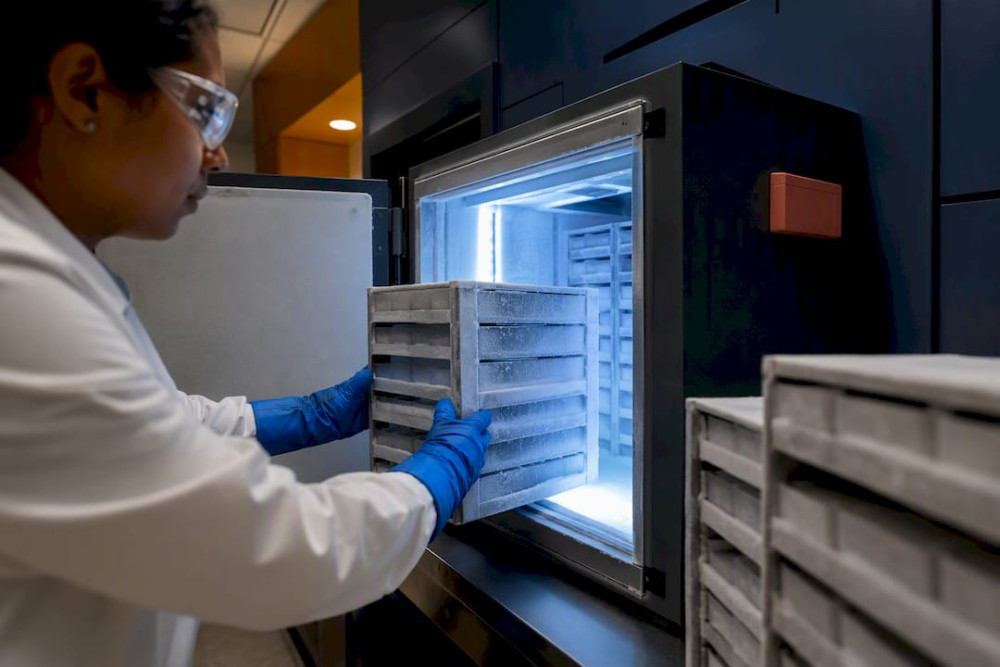
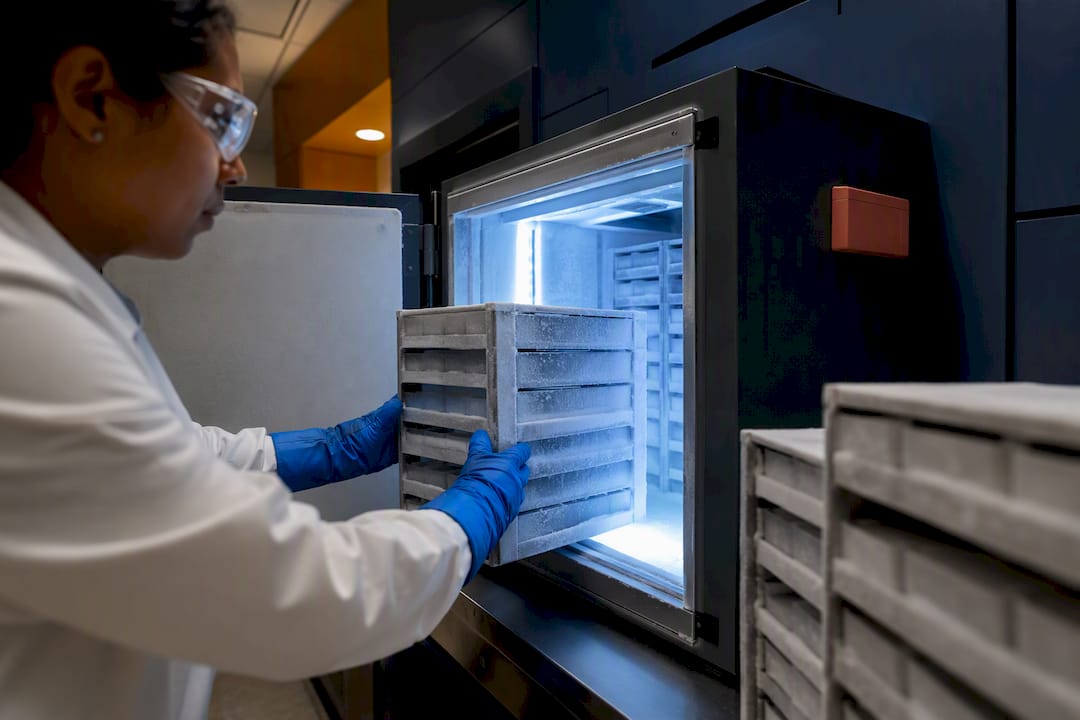
Storage conditions vary by sample type. Frozen tissue often sits in liquid nitrogen (LN2) or ultra-low freezers at around negative 80 degrees Celsius, while FFPE blocks are stored at room temperature in climate-controlled archives. Every sample gets cataloged with searchable metadata so researchers can find exactly what they need without physically inventorying freezers.
When a researcher wants your sample, they don’t get automatic access. The process typically includes:
- A feasibility review, checking whether the biobank actually has samples matching the researcher’s criteria.
- A cost estimate, since processing and shipping specimens isn’t free.
- Access committee approval, confirming the proposed research meets ethical and scientific standards.
The NCTN Biobanks network illustrates this well, receiving, cataloging, and distributing biospecimens from clinical trials while giving researchers formal feasibility assessments before any tissue changes hands. Distribution timelines vary widely, from a few weeks for straightforward requests to many months for rare specimen types. Donors typically learn about outcomes indirectly, through aggregate reports, biobank newsletters, or published studies that credit the repository as a sample source.
How to Find a Biobank and Register to Donate
Finding the right program starts with matching your situation to the right type of biobank. University medical centers, disease-specific banks, national networks like the NIH NeuroBioBank, and event-driven programs like the Komen Tissue Bank all serve different needs.
- Identify your pathway. Surgical patients typically start with their surgical or oncology care team. Healthy volunteers can register directly with programs like Komen Tissue Bank or a university biobank such as Penn Medicine BioBank, Stanford’s Human Biorepository Tissue Bank, or the University of Maryland Brain and Tissue Bank for post-mortem donation.
- Register through the right channel. Most programs offer online intake forms, but many still prefer a phone conversation with a biobank coordinator, especially for post-mortem arrangements.
- Prepare your information. Have your medical history, contact details, and any prior research participation on hand before you register.
- Ask pointed questions before you consent. What’s the scope of consent? Will you receive any results? How is your data shared, and does donating cost you anything?
- Discuss post-mortem wishes with family early. If you’re considering brain or tissue donation after death, tell your family and your medical team now. Retrieval windows are often short, and confusion at the moment of need can derail even a well-intentioned donor’s wishes.
How Donated Tissue Turns Into Real Discoveries
Peer-reviewed research consistently points to the same conclusion: biobanks aren’t a nice-to-have for oncology, they’re foundational infrastructure. Annotated tumor and normal tissue samples let scientists trace disease progression, study why certain cancers resist treatment, and validate biomarkers before they ever reach a clinical trial.
The scientific power of a donated sample comes almost entirely from what’s attached to it. A tumor sample without treatment history and outcome data is a curiosity. The same sample linked to years of follow-up data becomes a tool for answering questions about resistance, recurrence, and which patients respond to which therapy.
That’s the exact model HCRF supports through its partnership with the Robert H. Lurie Comprehensive Cancer Center of Northwestern University. Donated funding at HCRF works the same way donated tissue works at a biobank: it’s most valuable when it’s tracked, reported on, and connected back to real outcomes.
- HCRF funds “out of the box” research projects that often depend on well-annotated biospecimens to test new hypotheses.
- Progress reports and donor communications let supporters see, in concrete terms, how their contributions translate into research.
- Published studies that cite biobank specimens give donors a durable, traceable link between their gift and a scientific outcome.
HCRF’s Perspective: What Stewardship Should Actually Look Like
We think about donor trust the same way a biobank has to think about tissue custodianship: it’s a responsibility, not a transaction. Every gift, whether it’s a tube of blood sent to a repository or a check sent to fund a researcher’s project, deserves a clear account of where it went and what it made possible. That’s the standard we hold ourselves to at the Hippocratic Cancer Research Foundation, and it’s the standard we’d encourage you to expect from any biobank or research funder you support.
Tissue donation isn’t the only door into this work. You can back innovative research directly through philanthropic giving, show up at donor engagement events, or volunteer alongside tissue-collection drives run by programs like Komen Tissue Bank. Whatever path you choose, look for organizations that publish real progress reports, not vague mission statements, and name the research their funding actually reaches.
— HCRF
Where to Learn More or Start the Process
- NIH NeuroBioBank: national coordination for post-mortem brain tissue donation.
- NCTN Biobanks: clinical trial specimen catalogs for researchers.
- Komen Tissue Bank: event-based normal breast tissue donation.
- Hippocratic Cancer Research Foundation: support research that depends on donated, annotated tissue.
This article is general information, not a substitute for advice from a qualified doctor. Consult a qualified healthcare professional about your own circumstances before acting on anything here.
Sources
- Biobanking and Biospecimens: Cancer-relevant chapter — NCBI Bookshelf
- Basic principles of biobanking: from biological samples to precision medicine — PMC
- NCTN Biobanks — National Cancer Institute resource
- Komen Tissue Bank — Indiana University/ Komen partnership
Recommended

Practical how to for donors on tribute donations: five ready message templates, the IRS $250 receipt rule, and memorial page setup steps.
Read More →
Discover how to make anonymous charitable donations while staying IRS-compliant. Utilize donor-advised funds and other options for total privacy.
Read More →