
Most Deadly Childhood Cancer: What Parents Must Know
July 19, 2026
Most Deadly Childhood Cancer: What Parents Must Know

Brain and central nervous system (CNS) tumors are now the leading cause of childhood cancer death in the United States, having surpassed leukemia in pediatric cancer mortality. More than 500 children die from brain tumors every year, and approximately 15 children receive a brain tumor diagnosis every single day. That reality is devastating, and it is one that every parent and caregiver deserves to understand clearly. Knowing which cancers carry the greatest risk, what symptoms to watch for, and what treatment looks like gives families the power to act quickly when it matters most.
What are the most deadly types of childhood cancers?
Brain and CNS tumors hold the grim distinction of causing more childhood cancer deaths than any other cancer type. Approximately 15 children are diagnosed with a brain tumor every day in the U.S. That volume, combined with the complexity of treating tumors near critical brain structures, makes this cancer category uniquely dangerous.

Medulloblastoma: the most common malignant brain tumor in children
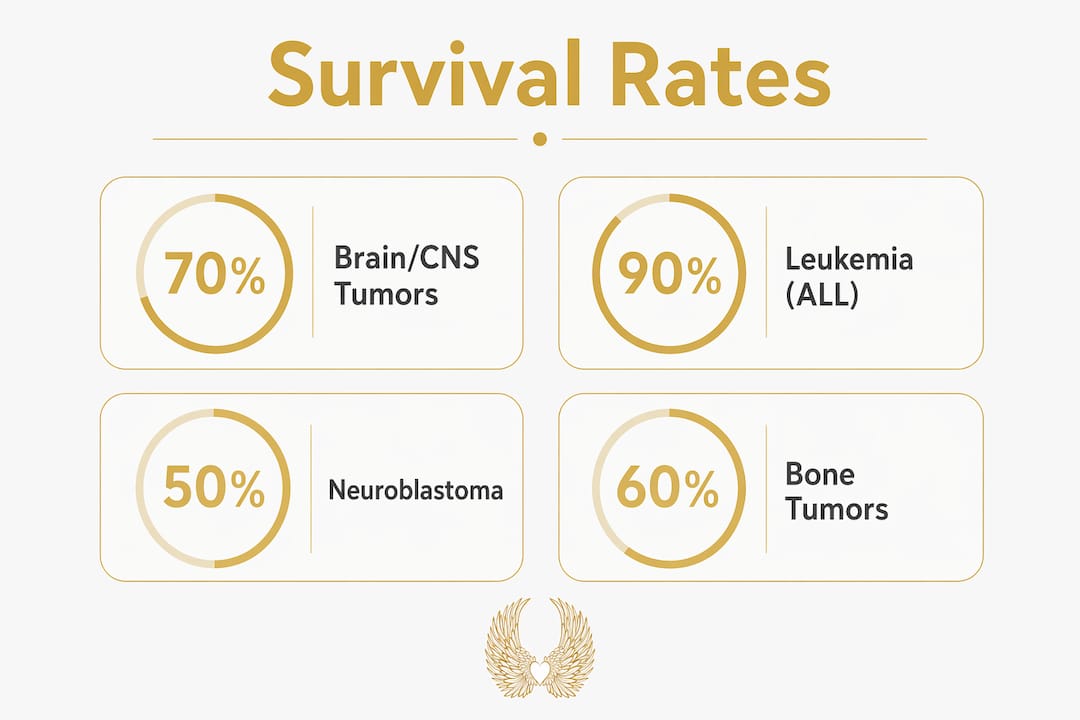
Medulloblastoma is the most common malignant pediatric brain tumor, accounting for 25% of all CNS tumors in children. Incidence peaks between ages 3 and 7, with 70% of cases diagnosed in children under 10. The 5-year survival rate sits around 65–70%, which means roughly 1 in 3 children diagnosed will not survive to the five-year mark. That statistic reflects both the tumor’s aggressiveness and the limits of current treatment.
Leukemia in children: most common, but improving
Acute lymphoblastic leukemia (ALL) is the most common childhood cancer, representing 75% of all childhood leukemia diagnoses. Survival rates for ALL now exceed 90% in many cases, a remarkable achievement driven by decades of clinical research. Yet leukemia still claims lives, particularly in children who relapse or carry high-risk genetic markers. ALL primarily affects children under 15, and its sheer prevalence means it still accounts for a significant share of pediatric cancer deaths in absolute numbers.
Neuroblastoma and bone tumors: rare but ruthless
Neuroblastoma and primary bone tumors carry some of the poorest outcomes among all childhood cancer types. These cancers are less common than leukemia, but their aggressive behavior and resistance to standard therapies make them disproportionately deadly. Neuroblastoma typically affects children under 5 and often spreads widely before diagnosis. Bone tumors such as osteosarcoma and Ewing sarcoma strike older children and adolescents, with survival rates that lag well behind those for ALL.
| Cancer type | Primary age group | 5-year survival rate |
|---|---|---|
| Brain/CNS tumors (medulloblastoma) | Ages 3–10 | ~65–70% |
| Acute lymphoblastic leukemia (ALL) | Under 15 | Over 90% |
| Neuroblastoma | Under 5 | Variable, often lower |
| Bone tumors (osteosarcoma, Ewing) | Adolescents | Below 70% for metastatic |
Pro Tip: If your child receives a cancer diagnosis, ask the oncologist specifically about molecular subtyping. For brain tumors, molecular classification such as WNT-activated or SHH-activated subtypes directly shapes treatment intensity and prognosis.
How can parents recognize symptoms of deadly childhood cancers?
Symptoms of the most serious childhood cancers are easy to dismiss because they often look like ordinary childhood illnesses. Persistent fever, bone pain, and limping in a child with leukemia can look exactly like a viral infection or a sports injury. That overlap causes diagnostic delays, and delays worsen outcomes. Recognizing which symptom patterns warrant urgent attention is one of the most powerful tools a parent has.
Symptoms by cancer type
Brain and CNS tumors:
- Persistent or worsening headaches, especially in the morning
- Nausea and vomiting without a clear cause
- Vision changes, double vision, or eye movement problems
- Balance problems, clumsiness, or difficulty walking
- Behavioral changes, personality shifts, or declining school performance
- Seizures with no prior history
Leukemia (ALL):
- Unexplained fatigue or paleness
- Persistent fever lasting more than a week
- Bone pain or joint pain, often in the legs
- Easy bruising or unusual bleeding
- Swollen lymph nodes in the neck, armpits, or groin
- Frequent infections
Neuroblastoma:
- A lump or swelling in the abdomen, chest, or neck
- Bulging eyes or dark circles under the eyes
- Weakness or paralysis in the legs
Pro Tip: The American Academy of Pediatrics recommends that persistent unexplained symptoms in children, especially bone pain combined with fever, trigger an immediate pediatric oncology referral rather than a “wait and see” approach.
No single symptom confirms cancer. But a cluster of symptoms that persists beyond two weeks, or that keeps returning without a clear explanation, deserves a conversation with a pediatric oncologist. Trust your instincts as a caregiver. You know your child.
What are current treatments for the deadliest childhood cancers?
Treatment for the most lethal pediatric cancers has grown far more complex and far more targeted over the past two decades. The days of one-size-fits-all chemotherapy are giving way to approaches shaped by a tumor’s molecular identity, the child’s age, and the extent of disease at diagnosis.
Medulloblastoma treatment: a multimodal approach
Managing medulloblastoma requires risk-adapted care that integrates molecular subgrouping, neuroimaging, surgery, radiation, and chemotherapy. The treatment sequence typically follows this structure:
- Surgical resection. The goal is maximum safe removal of the tumor while protecting surrounding brain tissue.
- Molecular subgrouping. Pathologists classify the tumor as WNT-activated, SHH-activated, or non-WNT/non-SHH. This classification determines how aggressively the child is treated.
- Radiation therapy. Craniospinal radiation targets the brain and spinal cord, where medulloblastoma commonly spreads. Younger children face higher risks of neurocognitive damage from radiation.
- Chemotherapy. Multi-agent chemotherapy follows radiation to eliminate remaining cancer cells and reduce relapse risk.
- Long-term monitoring. Survivors require ongoing surveillance for tumor recurrence and treatment-related complications.
“Survivors of pediatric brain tumors often face lifelong neurocognitive and neuroendocrine issues requiring ongoing specialized care. Treatment advances now focus on balancing cure rates with minimizing long-term effects.” — StatPearls, Medulloblastoma
Treatment for childhood leukemia (ALL)
Modern ALL treatment involves multi-year chemotherapy regimens, CNS prophylaxis to prevent brain involvement, and sometimes radiation. Treatment spans two to three years in most cases. Families must prepare for immune suppression, frequent hospitalizations, and the emotional weight of a prolonged treatment period. The family’s preparation and support during this time is not optional. It is a core part of treatment adherence and, ultimately, survival.
Interprofessional care teams, including pediatric oncologists, neuropsychologists, endocrinologists, and social workers, are now standard in leading children’s cancer centers. This team approach reflects a growing recognition that curing the cancer is only part of the mission.
What is the prognosis for children with these cancers?
Prognosis varies widely depending on cancer type, molecular subtype, age at diagnosis, and whether the cancer has spread. Understanding these factors helps families set realistic expectations and ask the right questions.
Brain tumor survivors face a different kind of challenge than leukemia survivors. A child who completes medulloblastoma treatment at age 6 may carry neurocognitive and endocrine complications for the rest of their life. Radiation to the developing brain affects memory, attention, and hormone regulation. Long-term follow-up care, including monitoring of cognitive function, growth, and psychosocial health, is not optional for these children. It is a medical necessity.
For ALL, the picture is more hopeful. Survival rates exceeding 90% represent one of oncology’s greatest achievements. Yet relapse remains a serious risk, and children who relapse face a much harder road. High-risk genetic subtypes such as Philadelphia chromosome-positive ALL require more intensive treatment and carry lower survival odds.
| Cancer type | Key prognostic factors | Survivor care priorities |
|---|---|---|
| Medulloblastoma | Molecular subtype, age, metastasis | Neurocognitive monitoring, endocrine health |
| ALL | Genetic subtype, response to induction | Relapse surveillance, immune recovery |
| Neuroblastoma | Stage, MYCN amplification, age | Long-term organ function monitoring |
| Bone tumors | Metastasis at diagnosis, surgical margins | Limb function, pulmonary surveillance |
The cancer awareness calendar published by the Hippocratic Cancer Research Foundation highlights pediatric cancer awareness months throughout the year, giving families and advocates specific windows to amplify their voices and connect with research communities.
Key Takeaways
Brain and CNS tumors are now the most deadly childhood cancer, and early symptom recognition combined with molecular-guided treatment gives children the best chance of survival and quality of life.
| Point | Details |
|---|---|
| Brain tumors lead in mortality | CNS tumors have surpassed leukemia as the top cause of childhood cancer death. |
| ALL survival has improved dramatically | Survival rates for acute lymphoblastic leukemia now exceed 90% with modern treatment. |
| Symptoms often mimic common illness | Persistent fever, bone pain, and limping require pediatric oncology evaluation, not just observation. |
| Molecular subtyping changes treatment | Brain tumor classification by WNT or SHH subtype directly guides how aggressively a child is treated. |
| Survivor care is lifelong | Children treated for brain tumors need ongoing neurocognitive, endocrine, and psychosocial monitoring. |
Our perspective on fighting the deadliest childhood cancers
We have spent years watching families walk into cancer centers carrying the weight of a diagnosis they never expected. What strikes us every time is not the fear, though the fear is real and valid. It is the determination. Parents become researchers overnight. They learn terms like “molecular subgrouping” and “CNS prophylaxis” because their child’s life depends on it.
What we know from working alongside researchers at the Robert H. Lurie Comprehensive Cancer Center of Northwestern University is this: the science is moving. Molecular classification of medulloblastoma has already changed how oncologists treat children, sparing some from the full burden of craniospinal radiation. That is not a small thing. That is a child who grows up with a better chance of remembering their childhood.
We also know that the gap between what research has discovered and what families actually receive in care is still too wide. Not every child has access to a comprehensive cancer center. Not every family can sustain two years of chemotherapy without financial and emotional support. That gap is where advocacy and funding matter most.
The most important thing you can do as a parent or caregiver is to push for early referral, ask about molecular testing, and connect with a multidisciplinary team. Do not accept vague reassurances when your child’s symptoms persist. You are your child’s most powerful advocate. We are here to stand with you.
— HCRF
How the Hippocratic Cancer Research Foundation supports families
The Hippocratic Cancer Research Foundation (HCRF) is a 501©(3) nonprofit that funds unconventional, high-potential cancer research at the Robert H. Lurie Comprehensive Cancer Center of Northwestern University. For families facing a pediatric cancer diagnosis, HCRF represents both a source of hope and a practical resource.

HCRF supports research into therapies that go beyond standard protocols, including approaches targeting the molecular drivers of brain tumors and leukemia. Families can access research and support resources directly through the HCRF website, including information on ongoing studies and ways to connect with the broader pediatric cancer community. For those who want to contribute to the fight, the 2026 donor’s guide explains how research funding reaches children who need it most. THEY NEED OUR SUPPORT. Every contribution moves the science forward.
FAQ
What is the most deadly childhood cancer right now?
Brain and central nervous system tumors are now the leading cause of childhood cancer death in the U.S., surpassing leukemia. More than 500 children die from brain tumors each year.
Is leukemia still a deadly childhood cancer?
Leukemia remains serious, but survival rates for acute lymphoblastic leukemia now exceed 90% with modern treatment. Children who relapse or carry high-risk genetic subtypes still face significantly lower survival odds.
What symptoms should prompt a parent to seek cancer screening?
Persistent fever, unexplained bone pain, limping, morning headaches, or unusual bruising lasting more than two weeks warrant an immediate pediatric oncology evaluation. Delayed diagnosis worsens outcomes for both leukemia and brain tumors.
What is molecular subgrouping in childhood brain tumor treatment?
Molecular subgrouping classifies medulloblastoma into subtypes such as WNT-activated or SHH-activated, which directly guides treatment intensity. This classification allows oncologists to reduce treatment burden for lower-risk children while intensifying care for higher-risk cases.
Do childhood cancer survivors need lifelong medical care?
Yes. Survivors of pediatric brain tumors in particular require ongoing monitoring for neurocognitive deficits, endocrine dysfunction, and psychosocial challenges caused by aggressive treatment during critical developmental years.
Recommended
- Hippocratic Cancer Research Foundation: Innovative Therapies | What Causes Cancer: Key Factors and Prevention
- Hippocratic Cancer Research Foundation: Innovative Therapies | Signs of Appendix Cancer: What You Need to Know
- Hippocratic Cancer Research Foundation: Innovative Therapies | Supplements to Avoid During Immunotherapy: A Patient Guide
- Hippocratic Cancer Research Foundation: Innovative Therapies | Teas to Avoid During Chemo: A 2026 Patient Guide